A First-Timer’s Guide to the Medinas of Morocco: What to Know Before You Go
Explore Morocco’s greatest medinas with confidence. Learn what a medina is, how to navigate Fes, Marrakech, Chefchaouen, Meknes, and Essaouira, what to expect, what to avoid, and why a licensed MSITravels guide changes everything.
Morocco’s medinas are among the most extraordinary urban environments in the world. These are not open-air museums or reconstructed heritage zones. They are living historic cities where families, craftsmen, merchants, students, bakers, scholars, worshippers, and food vendors still move through urban patterns shaped centuries ago. For first-time visitors, Morocco’s medinas can feel magical, intense, beautiful, confusing, and overwhelming all at once. With the right preparation and a trusted local guide, they become some of the most meaningful places you will ever experience. This first-timer’s guide from MSITravels explains what Moroccan medinas are, how to explore them respectfully, which medinas to prioritize, what mistakes to avoid, and how to turn your first medina visit from stressful into unforgettable.
A Moroccan medina is more than an old town. It is a complete world.
Inside the walls, life follows a rhythm that is very different from modern city planning. Streets twist instead of forming grids. Shops are grouped by craft. Homes hide behind plain walls and open inward into courtyards. Mosques, fountains, hammams, bakeries, schools, workshops, and markets sit close together because the medina was designed around walking, community, worship, trade, and daily life.
For travelers from the USA, Canada, the UK, Australia, Europe, and beyond, entering a Moroccan medina can feel like stepping into another century. But it is important to understand that medinas are not frozen in time. They are alive. People are not there to decorate the traveler’s photograph. They are working, shopping, praying, studying, delivering goods, visiting neighbors, repairing doors, baking bread, and raising families.
That is what makes Moroccan medinas so powerful.
They are historic, but not dead.
They are beautiful, but not staged.
They are confusing, but not random.
They are crowded, but full of structure once you learn how to read them.
At MSITravels, we believe every first-time visitor to Morocco should experience at least one major medina with a licensed local guide. Not because the medinas are unsafe, but because they are layered. Without context, you may see shops, doors, alleys, crowds, and colors. With the right guide, you begin to understand architecture, history, religion, craft, family life, urban design, trade, etiquette, and the quiet logic behind what first appears chaotic.
The medina is where Morocco becomes real.
What Is a Medina?
A medina is the historic old city of a Moroccan urban settlement. The word often refers to the original walled city, built long before modern roads, cars, European-style boulevards, and the colonial “ville nouvelle,” or new town.
In many Moroccan cities, the medina remains the cultural and emotional heart of the city. It may contain markets, mosques, madrasas, fountains, hammams, workshops, traditional homes, riads, bakeries, food stalls, and old neighborhood systems that still shape daily life.
A medina is not only an architectural space. It is a social system.
Historically, Moroccan medinas were designed around community needs. Each neighborhood had access to key daily institutions: a mosque, a hammam, a fountain, a bakery, and small shops. Crafts were often grouped by type, with leather workers in one area, metalworkers in another, dyers in another, woodworkers in another, and spice sellers in another.
This organization can still be seen today in places like Fes and Marrakech.
Unlike modern cities, medinas do not follow a simple grid. Streets may narrow suddenly, turn unexpectedly, pass under covered sections, or end in residential lanes. This irregular layout developed over centuries based on property boundaries, terrain, family compounds, defensive needs, shade, privacy, and commercial function.
For first-time visitors, this can feel disorienting. For locals, it makes sense through memory, landmarks, and lived experience.
A medina is also usually pedestrian-focused. In the oldest areas, cars cannot enter. Goods are moved by handcart, donkey, mule, bicycle, motorbike in some places, or human strength. This creates an atmosphere unlike modern traffic-based cities.
When you walk through a medina, you are not only visiting a tourist site. You are entering a living city that existed before the modern world was organized around cars.
That is part of the wonder.
Why Morocco’s Medinas Feel So Different
Moroccan medinas feel different because they engage every sense at once.
You hear the call to prayer, metal being hammered, shopkeepers speaking, carts moving over stone, motorcycles passing in narrow lanes, children laughing, and bakers calling to customers.
You smell bread, cedarwood, leather, spices, smoke, mint tea, orange blossom, grilled meat, fresh herbs, and sometimes the strong scent of tanneries or animals.
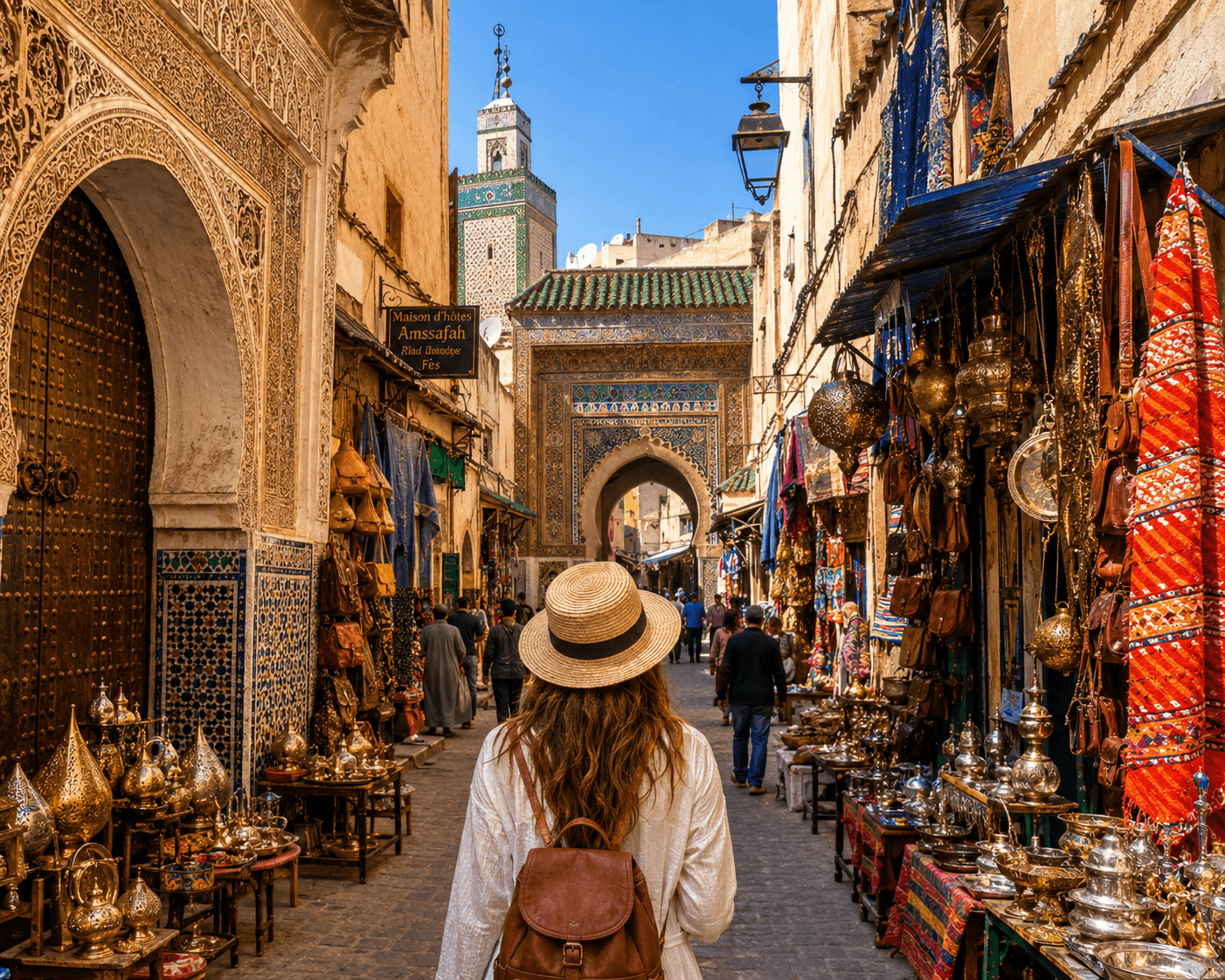
You see carved doors, zellige tilework, fountains, hanging lamps, bright textiles, sacks of spices, brass trays, leather slippers, patterned carpets, painted ceilings, and shadows falling across old walls.
You feel uneven stone under your feet, the shift from sun to shade, the sudden coolness of a riad courtyard, the heat of a hammam, or the press of a busy market lane.
You taste olives, dates, mint tea, harira, msemen, tagine, fresh bread, pastries, and street snacks.
This sensory richness is one of the reasons travelers love Moroccan medinas. It is also why they can become overwhelming if you are unprepared.
The key is not to rush.
A medina is not best experienced as a checklist. It is best experienced as a layered walk with someone who can help you slow down, notice details, and understand what is happening around you.
A first-time visitor may look at Fes medina and see chaos.
A good guide sees neighborhoods, craft systems, spiritual centers, historic routes, family districts, hidden monuments, and social logic.
The difference is interpretation.
Morocco’s Greatest Medinas for First-Time Visitors
Morocco has many medinas, each with its own personality. Some are large and complex. Others are compact and easier to explore. Some feel commercial and energetic. Others feel quiet and local. Some are best visited with a guide. Others are manageable independently after orientation.
Below are the most important medinas for first-time visitors.
Fes el-Bali: Morocco’s Most Profound Medina
Fes el-Bali is often considered the most important medina in Morocco. It is one of the world’s great historic urban environments and one of the most extraordinary places a traveler can visit in North Africa.
Founded in the early Islamic period, Fes became a center of scholarship, religion, craft, trade, and urban culture. Its old medina is famous for its narrow lanes, traditional workshops, madrasas, mosques, fountains, tanneries, and deep historical atmosphere.
For first-time visitors, Fes can be astonishing.
It can also be confusing.
The medina is large, dense, and difficult to navigate without expert help. Digital maps are often unreliable inside the narrow streets. Alleys split, turn, and reconnect in ways that can disorient even experienced travelers. Many lanes are too narrow for cars, which gives the medina its remarkable atmosphere but also makes orientation challenging.
This is why MSITravels strongly recommends a licensed Fes guide for every first-time visitor.
With the right guide, Fes becomes one of the most powerful days of your Morocco journey.
A guided visit may include:
Bab Bou Jeloud, the famous blue gate.
Bou Inania Madrasa.
Al-Qarawiyyin area.
Chouara Tannery viewpoints.
Nejjarine Fountain and Museum area.
Traditional craft workshops.
Food markets.
Residential lanes.
The Mellah and Jewish heritage areas.
Panoramic viewpoints.
Historic fondouks and caravanserai spaces.
The real magic of Fes is not only in its famous sites. It is in the way daily life continues between them. A baker pulls bread from the oven. A carpenter works cedar by hand. A student walks past a medieval madrasa. A family door opens briefly into a courtyard. A mule carries goods through a lane too narrow for a vehicle.
Fes is not the easiest medina.
It is the deepest.
For travelers who want to understand Morocco beyond surface beauty, Fes is essential.
Marrakech Medina: Morocco’s Most Iconic Medina
Marrakech is the medina many first-time visitors imagine before arriving in Morocco.
It is colorful, dramatic, energetic, and highly visual. It has Djemaa el-Fna, rooftop cafés, souks, palaces, gardens, hammams, riads, spice stalls, lantern shops, and a tourism infrastructure that makes it more accessible than Fes for many travelers.
Founded as an imperial city, Marrakech has long connected the Atlas Mountains, Sahara trade routes, and wider Moroccan history. Today, it is Morocco’s most famous travel city and often the best introduction for first-time visitors.
The heart of Marrakech medina is Djemaa el-Fna, the famous public square that changes personality between day and night. Around it, the souks extend through covered lanes, craft quarters, food stalls, shops, workshops, and historic streets.
A first guided day in Marrakech may include:
Koutoubia Mosque exterior.
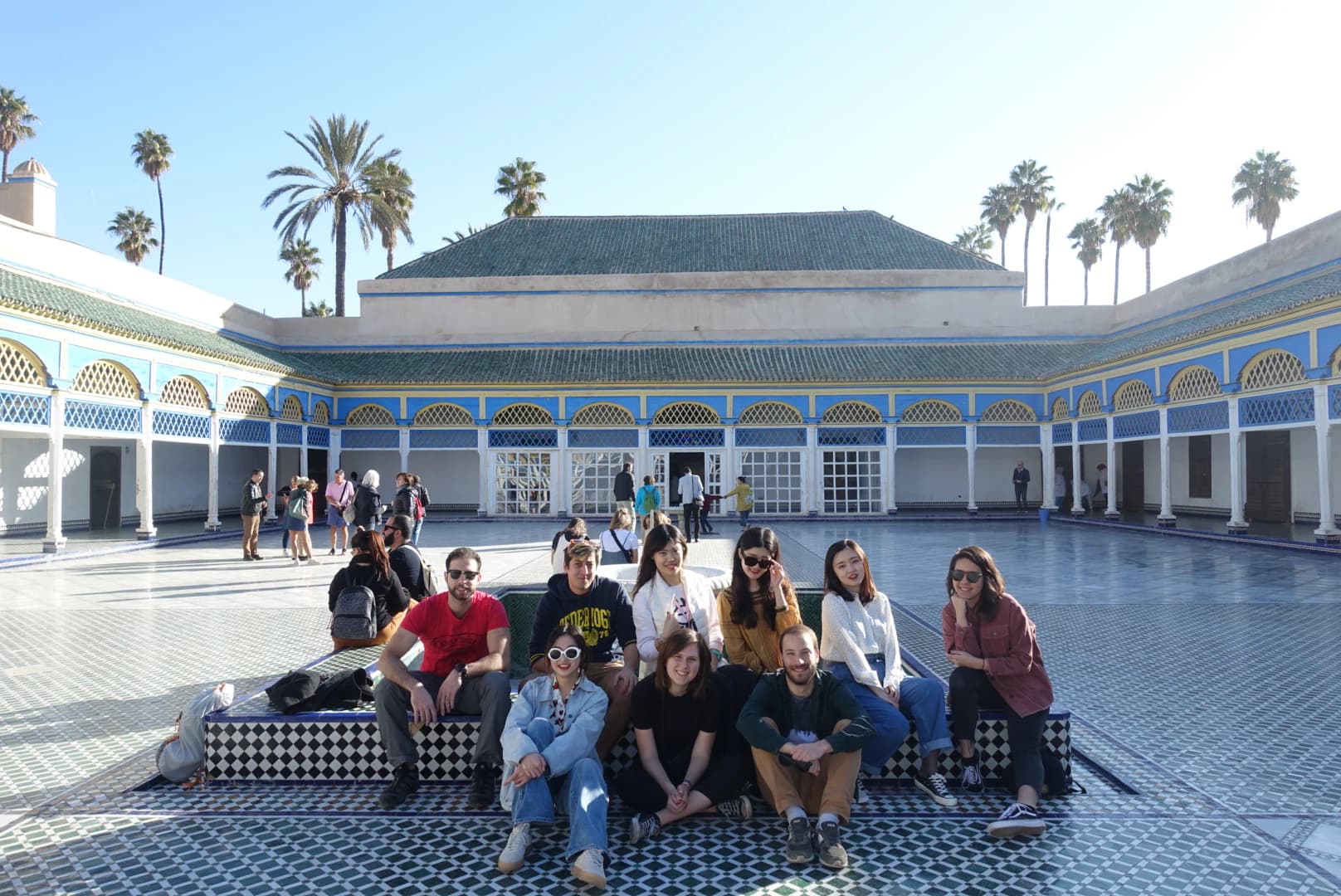
Bahia Palace.
The Mellah.
Djemaa el-Fna.
Souk Semmarine.
Craft areas.
Spice stalls.
Hidden fondouks.
Rooftop tea or lunch.
Marrakech is easier to navigate than Fes, but it can feel more intense in another way. Vendor approaches are more common, and the tourist economy is more visible. A guide helps reduce pressure and gives structure to the experience.
Marrakech is especially good for first-time visitors because it offers both excitement and comfort. After exploring the medina, you can return to a peaceful riad, enjoy a rooftop dinner, visit a hammam, or relax in a garden.
Marrakech opens the door to Morocco.
Fes takes you deeper inside.
Chefchaouen Medina: Morocco’s Gentle Blue Introduction
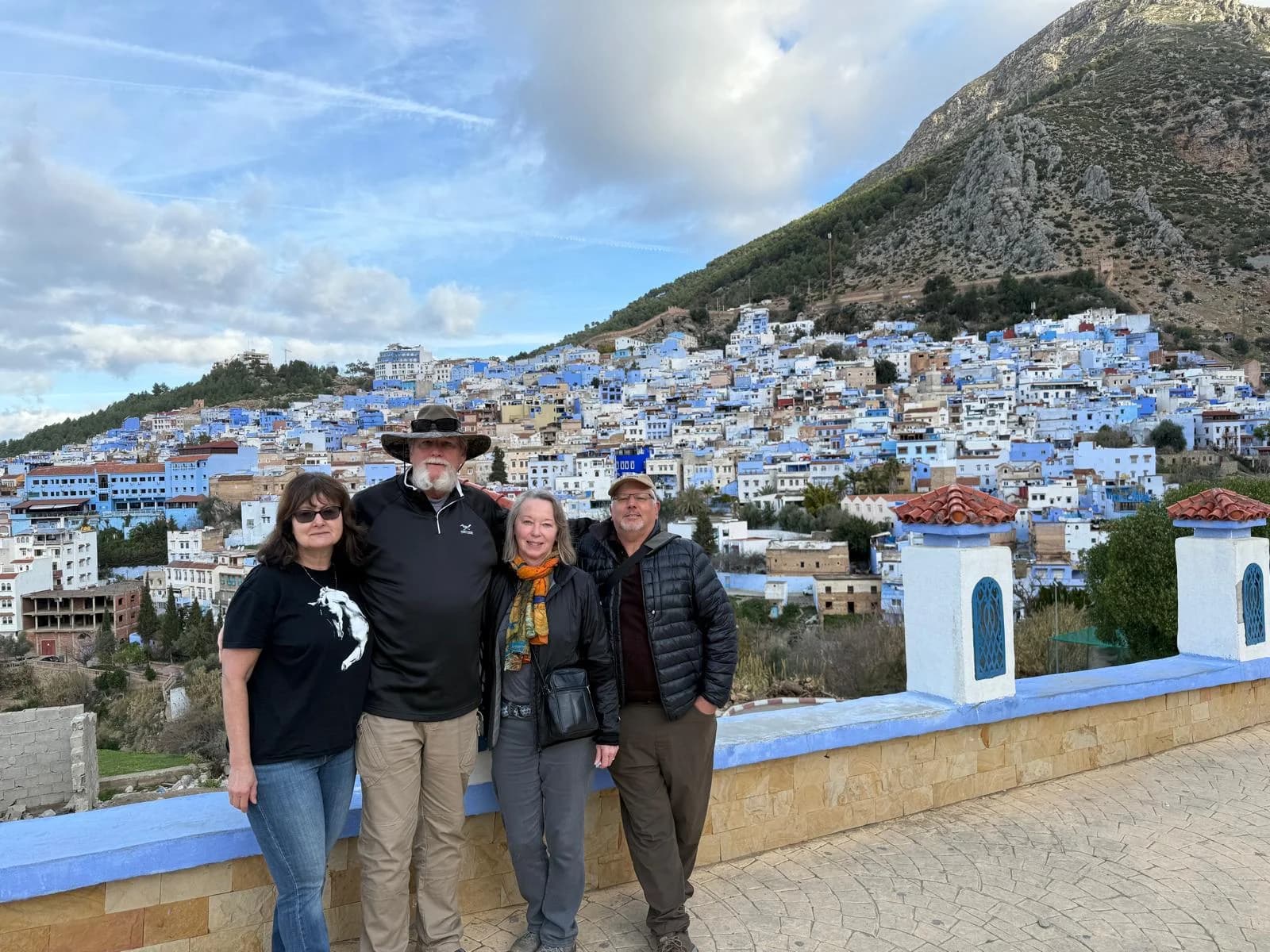
Chefchaouen is one of Morocco’s most photogenic towns, known for its blue-and-white streets, mountain setting, and relaxed atmosphere.
Its medina is much smaller and easier to explore than those of Fes or Marrakech. This makes it a wonderful introduction for travelers who feel nervous about larger Moroccan medinas.
Chefchaouen’s beauty is immediate. Blue-painted walls, stairways, flowerpots, small squares, mountain views, and soft light create a peaceful visual experience. It is popular with photographers and travelers looking for a slower pace.
The atmosphere is generally calmer than Marrakech or Fes. Vendor pressure is usually lower, and the medina is more manageable on foot. Many travelers enjoy wandering independently after a short orientation.
That said, Chefchaouen is not only a photo destination. It has a history shaped by mountain culture, Andalusian influence, local trade, and religious traditions. A guide can add useful context, especially if you want to understand more than the blue walls.
Chefchaouen is ideal for:
First-time medina visitors.
Families.
Photographers.
Couples.
Travelers who want a slower pace.
Travelers combining northern Morocco with Fes, Rabat, or Tangier.
It is not as historically deep as Fes or as energetic as Marrakech, but it offers a gentle, beautiful medina experience that many travelers love.
Meknes Medina: Morocco’s Underrated Imperial City
Meknes is one of Morocco’s imperial cities and one of the most underrated stops for travelers.
Located near Fes, Meknes offers historic gates, markets, old walls, imperial architecture, and a more local atmosphere than Morocco’s most famous tourist cities. Its medina is less crowded with visitors, which can make it feel more authentic and relaxed.
Meknes is often visited as a day trip from Fes, sometimes combined with the Roman ruins of Volubilis and the holy town of Moulay Idriss. This makes it an excellent addition for travelers who want history without the intensity of Fes medina.
Highlights may include:
Bab Mansour.
El Hedim Square.
The old medina.
Historic granaries and stables.
Mausoleum areas where accessible.
Local markets.
Nearby Volubilis Roman ruins.
Meknes is especially good for travelers who enjoy imperial history but prefer fewer crowds. It is also a useful contrast to Fes. While Fes feels dense and scholarly, Meknes feels more open, imperial, and understated.
If you have time, Meknes deserves more than a passing glance.
Essaouira Medina: The Easiest Medina to Explore Independently
Essaouira’s medina is one of the easiest and most pleasant medinas in Morocco for first-time visitors.
Located on the Atlantic coast, Essaouira is bright, breezy, artistic, and relaxed. The medina is compact, relatively easy to navigate, and surrounded by ocean air, ramparts, fishing boats, art galleries, cafés, and seafood restaurants.
For travelers who found Marrakech or Fes overwhelming, Essaouira often feels like a relief.
The pace is slower.
The streets are wider.
The sea provides orientation.
The atmosphere is creative and coastal.
Essaouira is known for music, art, fishing culture, and a long history of trade. Its medina reflects Moroccan, Portuguese, Jewish, Amazigh, Arab, African, and Atlantic influences.
Highlights may include:
The ramparts.
The fishing port.
Skala de la Ville.
Art galleries.
Woodworking workshops.
Seafood restaurants.
Medina lanes.
Beach walks.
Rooftop views.
Essaouira is ideal at the end of a itinerary" class="msi-auto-link">Morocco itinerary. After the intensity of Marrakech, Fes, the Atlas Mountains, and the Sahara, it gives travelers space to breathe.
It is also excellent for families, couples, wellness travelers, and anyone who wants a medina experience with less pressure.
Rabat Medina: Elegant, Calm, and Often Overlooked
Rabat, Morocco’s capital, has a medina that is calmer and less tourist-saturated than Marrakech or Fes.
Many travelers pass through Rabat quickly, but the city deserves attention. Its medina, Kasbah of the Udayas, Atlantic views, Hassan Tower, Mohammed V Mausoleum, and refined atmosphere make it one of Morocco’s most elegant cities.
Rabat’s medina is not as dramatic as Fes or Marrakech, but it is more manageable and less overwhelming. It offers a good introduction to Moroccan urban life without the same level of vendor pressure.
For first-time visitors arriving through Casablanca, Rabat can be a pleasant first stop before continuing north to Chefchaouen or east to Fes.
Rabat is especially suitable for:
Travelers who prefer calm cities.
Families.
Senior travelers.
History lovers.
Travelers interested in Morocco’s modern capital.
It may not be the most famous medina, but it adds balance to a well-designed itinerary.
How Much Does It Cost to Explore Morocco’s Medinas?
One of the best things about Moroccan medinas is that they are living cities, not closed tourist parks. You do not pay an entrance fee simply to walk into most medinas.
However, specific monuments, gardens, museums, madrasas, palaces, or restored sites may require entry tickets. Prices can change, so always verify current fees before travel.
Typical costs may include:
Licensed city guide: approximately $80 to $150 for a full day, depending on city, season, language, and expertise.
Half-day guide: often around $50 to $80.
Small monument entries: usually modest.
Major gardens or museums: higher and sometimes require advance booking.
Tips for small services: carry small dirham notes or coins.
Souk snacks and tea: inexpensive but cash-based.
Shopping: highly variable.
MSITravels private tours include licensed city guides according to the itinerary, so travelers do not need to arrange guides separately for major medina days.
This is especially valuable in Fes and Marrakech, where guide quality can transform the entire experience.
Do You Need a Guide in Morocco’s Medinas?
For Fes: yes, absolutely for first-time visitors.
For Marrakech: strongly recommended, especially on your first day.
For Chefchaouen: helpful but not always necessary.
For Essaouira: optional for many travelers, though a guide adds cultural depth.
For Meknes and Rabat: useful if you want historical context.
A guide is not only for navigation. A guide helps you understand what you are seeing.
In Fes, without a guide, many travelers spend the day lost, tired, or moved through commercial routes by unofficial helpers. With a licensed guide, the medina becomes a structured, meaningful experience.
In Marrakech, a guide helps manage the souks, explain the city, reduce vendor pressure, and introduce you to hidden areas you might miss.
A good guide also helps with cultural etiquette. They know when photography is appropriate, how to ask permission, which shops are reputable, how to avoid unofficial fees, where to stop for tea, and how to pace the day.
At MSITravels, guide selection is one of the most important parts of our private tours. We match travelers with licensed local guides who know their city deeply and guide ethically.
A medina guide should not turn your day into a shopping circuit.
A medina guide should open the city.
First-Timer Tips for Exploring Morocco’s Medinas
1. Start Early
Morning is often the best time to explore. The air is cooler, streets are less crowded, and markets begin to wake naturally. In summer, early starts are essential.
Late afternoon can also be beautiful, especially for photography and atmosphere.
Avoid heavy medina walking during the hottest midday hours in warm months.
2. Wear Comfortable Shoes
Medina streets can be uneven, cobbled, sloped, dusty, or slippery in places. Comfortable walking shoes are essential. Avoid heels or delicate sandals.
3. Dress Respectfully
Morocco is welcoming, but modest dress is appreciated in medinas and traditional neighborhoods. For women, loose trousers, long skirts, covered shoulders, and light layers work well. For men, trousers or longer shorts and normal shirts are usually fine, though trousers are better for religious or traditional areas.
4. Carry Small Cash
Small purchases are usually cash-based. Carry small dirham notes and coins for snacks, tips, water, toilets, and small items.
5. Navigate by Landmarks
Do not rely completely on maps. In medinas, landmarks matter: gates, minarets, fountains, main streets, squares, and known shops. Your guide will help you understand orientation.
6. Learn “La Shukran”
“La shukran” means “no, thank you” in Arabic. Use it politely and keep walking if you are not interested. Avoid long explanations, as stopping can be interpreted as interest.
7. Ask Before Taking Photos of People
This is very important. Always ask before photographing people, especially women, children, artisans, shopkeepers, and families. Your guide can help you ask respectfully.
8. Do Not Accept Unsolicited Guides
If someone approaches you offering help, directions, or a tour, politely decline. Use licensed guides arranged through trusted sources.
9. Expect to Get a Little Lost
Even with preparation, medinas can be confusing. That is part of their nature. Stay calm, use landmarks, ask trusted shopkeepers or your guide, and do not panic.
10. Slow Down
The medina is not a race. Some of the best moments happen when you stop for tea, watch a craftsperson work, notice a doorway, or listen to your guide explain something small but meaningful.
Common First-Time Medina Mistakes
Mistake 1: Exploring Fes Without a Guide on Day One
This is the most common mistake. Fes is too complex for most first-time visitors to understand alone. A guide turns the experience from exhausting to extraordinary.
Mistake 2: Trying to See Everything in One Day
Fes, Marrakech, and even smaller medinas deserve time. One day may give an introduction, but not full understanding. Do not overload the route.
Mistake 3: Visiting at the Wrong Time of Day
Midday heat can make medina walking uncomfortable, especially in summer. MSITravels plans medina visits around better light, cooler temperatures, and local rhythm.
Mistake 4: Following Strangers
Unofficial helpers may seem friendly, but they often lead to shops, pressure, or requests for payment. Use trusted guides.
Mistake 5: Treating the Medina Like a Theme Park
People live and work in medinas. Be respectful. Do not block lanes, photograph people without permission, enter private areas, or treat poverty as scenery.
Mistake 6: Bargaining Aggressively Over Tiny Amounts
Bargaining is part of shopping, but respect matters. Negotiate with humor and fairness. Do not turn a few dirhams into a conflict.
Mistake 7: Shopping Too Early
If you buy the first thing you see, you may overpay or regret it. Look first. Learn quality. Ask your guide for fair pricing.
Mistake 8: Forgetting to Rest
Medinas are intense. Plan tea breaks, rooftop lunches, riad downtime, or hammam sessions.
What to Buy in Morocco’s Medinas
Moroccan medinas are wonderful places to shop if you know what to look for and shop ethically.
Popular items include:
Handwoven carpets.
Leather slippers.
Leather bags.
Ceramics.
Zellige-inspired tiles.
Lanterns.
Brass trays.
Spices.
Argan oil.
Textiles.
Embroidered linens.
Woodwork.
Jewelry.
Traditional clothing.
Art.
The best purchases are the ones connected to real craft and fair pricing. Avoid feeling pressured. A trustworthy guide can help you understand quality, origin, and fair negotiation.
For carpets, ceramics, and larger items, take time. Ask questions. Learn the difference between handmade and mass-produced. Understand shipping costs before buying.
Shopping should be enjoyable, not stressful.
Food and Snacks to Try in the Medina
Medinas are full of food, from simple snacks to refined riad dining.
Depending on the city, you may try:
Fresh Moroccan bread.
Msemen.
Harira.
Dates.
Olives.
Fresh orange juice.
Grilled meats.
Snail soup, for adventurous eaters.
Moroccan pastries.
Mint tea.
Tagine.
Couscous on Fridays.
Briouats.
Seafood in Essaouira.
For first-time visitors, food is best explored with guidance. A local guide can help identify clean, reputable places and explain what you are eating.
Food tours can be excellent in Marrakech and Fes, especially for travelers who want to understand markets, spices, bread ovens, and street food.
Medina Etiquette: How to Be a Respectful Visitor
Respect makes medina experiences better for everyone.
Follow these simple principles:
Dress modestly.
Ask before photographing people.
Step aside for carts, donkeys, and local traffic.
Do not block narrow lanes.
Speak politely.
Decline offers calmly.
Respect prayer times and mosque entrances.
Do not enter private courtyards unless invited.
Avoid loud behavior in residential areas.
Be patient with different rhythms.
Remember that the medina is someone’s home.
A respectful traveler receives a warmer Morocco.
Best Medina Itineraries for First-Time Visitors
If You Have 3 Days in Morocco
Choose Marrakech. Stay in a riad, take a guided medina tour, visit Bahia Palace, explore the souks, enjoy Djemaa el-Fna, and add Majorelle Garden or a hammam.
If You Have 5 Days
Choose Marrakech and Essaouira, or Fes and Chefchaouen. This gives you one intense medina and one gentler experience.
If You Have 7 Days
Include Marrakech, the Atlas Mountains, and either Fes or Essaouira. If you want deep culture, choose Fes. If you want relaxed coast, choose Essaouira.
If You Have 10 Days
A classic route can include Marrakech, Ait Benhaddou, the Sahara Desert, Fes, and Chefchaouen. This gives you several medina styles.
If You Have 12–14 Days
Include Marrakech, Fes, Chefchaouen, Rabat, Meknes, Essaouira, and the Sahara or Atlas Mountains. This allows a deeper understanding of Morocco’s urban variety.
MSITravels can design the right medina balance depending on your pace, interests, mobility, and comfort level.
Expert Insight from Aziz Sakri, Founder of MSITravels
“Fes medina is, for me, one of the most important places in Morocco. Not because it is the easiest, and not because it is the most polished. It is important because it contains so many layers of Moroccan history in one living place.
You walk through Fes and you see craft, religion, scholarship, trade, family life, architecture, and memory all together. The university, the tanneries, the madrasas, the fountains, the workshops, the old gates - these are not separate things. They are part of one living city.
But Fes needs time and the right guide. Without a guide, many travelers only feel lost. With a good guide, they begin to understand why this place matters.
That is true for all Moroccan medinas. They are not only places to photograph. They are places to read, with the help of someone who knows the language of the city.”
What MSITravels Medina Clients Say
“Our guide in Fes took us to a madrasa that had just reopened after restoration. We were almost alone inside. He explained the zellige tilework, the cedar carving, and the history with the depth of an architectural historian. Later, he introduced us to a craftsman still working by hand in a small workshop we would never have found alone. That day changed the way we understood Morocco.”
— William & Jean-Marie, Montreal, Canada
“Marrakech was overwhelming on the first evening, but our MSITravels guide made everything make sense the next morning. We learned how the souks were organized, how to say no politely, where to stop for tea, and what to notice. After that, we felt confident enough to enjoy the city instead of feeling lost.”
— MSITravels private tour clients, USA
“Essaouira was the perfect final medina after Fes and Marrakech. We loved the ocean air, the smaller streets, the art shops, and the slower rhythm. MSITravels planned the order perfectly.”
— MSITravels clients, UK
Final Advice for First-Time Medina Visitors
Morocco’s medinas are not always easy at first. They can be busy, noisy, confusing, and intense. But they are also among the most rewarding places you can visit anywhere in the world.
The key is preparation.
Hire a licensed guide in Fes and Marrakech.
Wear comfortable shoes.
Dress respectfully.
Carry small cash.
Ask before taking photos.
Do not follow unofficial guides.
Take breaks.
Stay curious.
Look beyond the shops.
Remember that the medina is alive.
If you travel through Morocco with the right mindset and the right local support, the medina becomes more than a maze. It becomes a doorway into Moroccan history, craft, architecture, food, faith, family, and daily life.
MSITravels has guided more than 4,000 travelers from the USA, Canada, the UK, and beyond through Morocco. We specialize in private Morocco tours, small group journeys, Sahara Desert experiences, family trips, senior-friendly travel, women-only tours, honeymoon packages, wellness retreats, student adventures, and tailor-made itineraries rooted in local connection.
If you are ready to experience Morocco’s medinas with confidence, depth, and trusted local guidance, visit MSITravels.com and contact our team. We would be honored to design a Morocco journey that helps you see not only the beauty of the medinas, but the life inside them.
MSITravels Team
Travel enthusiast and Morocco expert, sharing insights and stories from years of exploring Morocco's hidden gems and iconic destinations.
Ready to Explore Morocco?
Choose the experience that fits you best
Private Tour
A fully tailored Morocco experience crafted exclusively for you and your group.
View Private ToursSmall Group Tour
Join a curated group of like-minded travellers and discover Morocco together.
View Group ToursCustom Tour
Tell us your dream trip and we'll build a bespoke Morocco itinerary from scratch.
Tailor Your TourExplore More Stories
Discover more travel tips and inspiration for your Moroccan adventure
View All Articles