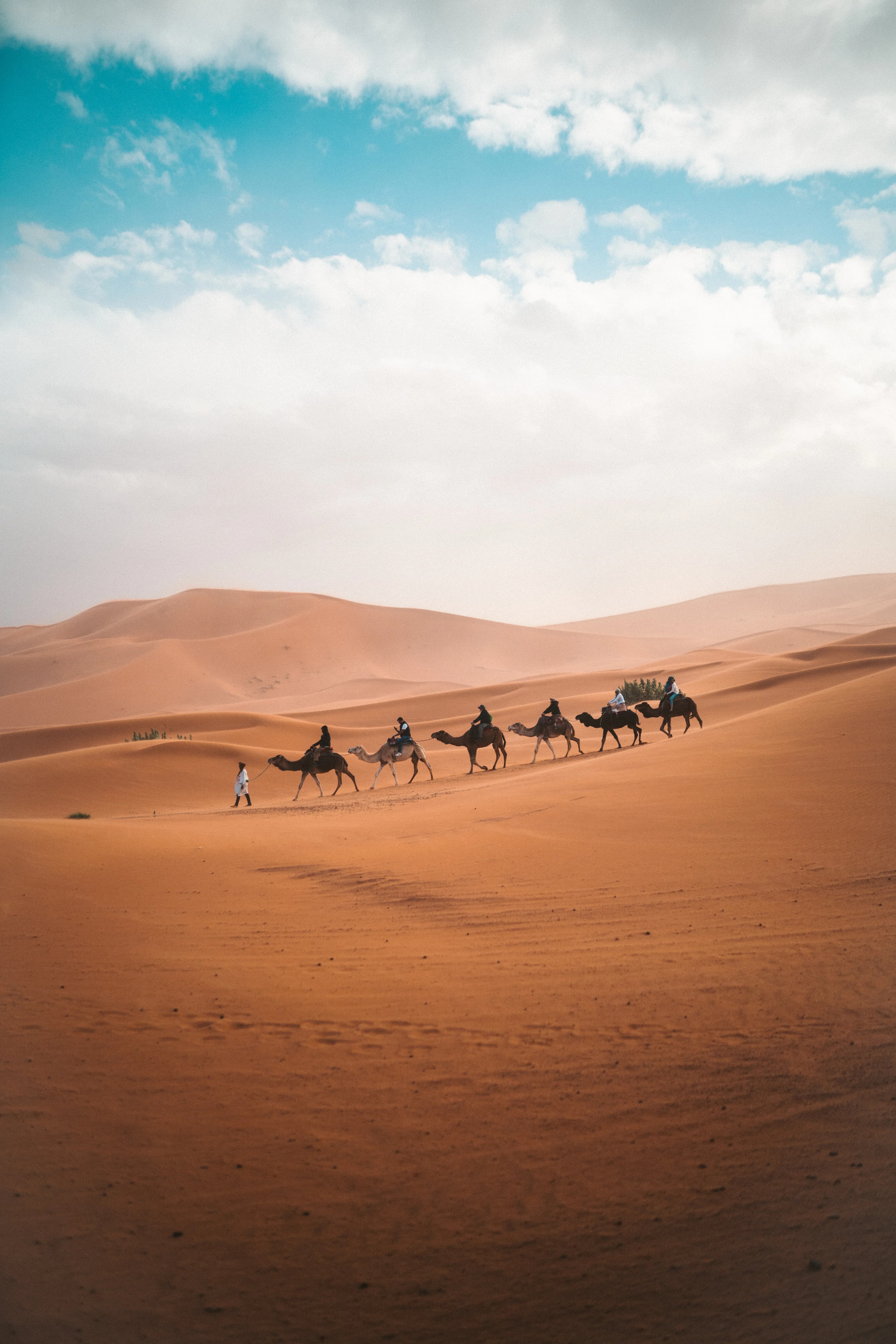
Before you go to Morocco
Visa & Entry
Most Western passport holders (USA, UK, EU, Canada, Australia) enter Morocco visa-free for 90 days. Stamp on arrival at any airport or border. No pre-application needed. Passport must be valid for 6+ months beyond travel dates.
Currency & Money
Moroccan Dirham (MAD). ~10 MAD per USD, ~10.8 MAD per EUR. Exchange at airports or banks. ATMs widely available in cities. Cards accepted in tourist spots — carry cash for souks. Dirhams cannot be taken out of the country.
Getting Around
MSITravels provides private 4x4 transport for all tours. Independently: CTM bus (comfortable, reliable between cities), trains (Casablanca–Fes–Marrakech corridor), and domestic flights (Royal Air Maroc). Taxis: petit taxis (in-city) and grand taxis (between towns). Always negotiate price before entering.
Health & Safety
The US State Department advisory for Morocco is Level 2 — Exercise Increased Caution (issued September 04, 2026, due to terrorism). Practical precautions: watch belongings in busy medinas, drink bottled water, avoid street food if your stomach is sensitive. Healthcare: private clinics in major cities are good. Travel insurance is strongly recommended. Pharmacies are widely available and well-stocked.
Official advisories: US State Department advisory · UK FCDO travel advice · Global Affairs Canada · Australia (Smartraveller)
Food & Drink
Moroccan cuisine is one of the world's most complex and fragrant. Must-try dishes: tagine (slow-cooked stew), couscous (Friday tradition), pastilla (sweet-savoury pastry), harira soup, msemen bread, mint tea. Alcohol is available in tourist restaurants and licensed bars. Tap water: use bottled or filtered.
Culture & Dress Code
Morocco is a Muslim-majority country with a relaxed, welcoming culture toward tourists. In tourist areas, Western dress is fine. In medinas, souks, and religious sites: cover shoulders and knees. Swimwear is acceptable at beach resorts and pool riads only. Remove shoes before entering a mosque. Friday is the Islamic holy day — some businesses may close midday.
What to pack for Morocco