Morocco Jewish Heritage: History, Mellah Quarters & 2,000 Years of Cultural Presence
Morocco is home to one of the world's oldest and most significant Jewish diasporic communities, a civilization that arrived with Phoenician traders, evolved through Roman North Africa, was transformed by the catastrophic expulsion of Jews from Iberia in 1492, and has left an extraordinary cultural legacy woven into the architecture, music, cuisine, and spiritual life of Moroccan cities.
For Jewish travelers, historians, and anyone interested in the complexity of North African civilizational exchange, Morocco's Jewish heritage offers a profound and moving journey. At MSITravels, we design private Jewish heritage tours that combine historical depth with authentic cultural encounter.
2,000 Years of Jewish Morocco: A Brief History
Ancient Presence
Jewish communities have been documented in Morocco since at least the 3rd century BCE, possibly arriving with Phoenician and Carthaginian merchants. By the Roman period, substantial Jewish communities existed in Morocco's coastal cities, already adapted to Berber-influenced North African life. Many Berber tribes converted to Judaism in the centuries before the Arab Islamic conquest.
The Arab-Islamic Period (7th–15th Century)
Under Arab Islamic rule, Morocco's Jewish communities lived as dhimmi, protected minorities within an Islamic state, with specific rights, obligations, and residential restrictions. The great imperial cities of Fes, Meknes, and Marrakech all developed Jewish quarters (mellah) where Jewish families lived in concentrated community. Despite periodic persecution, the Moroccan Jewish community produced extraordinary religious scholars, poets, and merchants during this period.
The Iberian Expulsion: 1492 - Morocco's Cultural Windfall
The expulsion of Jews from Spain in 1492 (and Portugal in 1497) sent hundreds of thousands of refugees to Morocco — transforming Moroccan Jewish communities with an influx of highly educated, commercially sophisticated Iberian Jews. The Sephardic refugees brought Andalusian architecture, Hebrew printing, refined cuisine, distinctive musical traditions, and commercial networks that enriched every city they settled. The legacy of the Spanish exiles remains powerfully visible in Morocco's Jewish heritage today.
20th Century & the Israeli State
Morocco had approximately 265,000 Jewish residents in 1948, one of the largest Jewish communities in North Africa and the Middle East. The establishment of Israel in 1948 and subsequent Arab-Israeli conflicts triggered a dramatic emigration that reduced Morocco's Jewish population to approximately 2,500-3,000 today (primarily elderly residents in Casablanca). Despite this exodus, Jewish cultural heritage remains extraordinarily present in Morocco's cities, and Morocco-Israel relations have warmed significantly since the Abraham Accords of 2020.
Key Jewish Heritage Sites in Morocco
The Fes Mellah: Africa's Oldest Jewish Quarter
The mellah of Fes el-Jedid, established in 1438 and Africa's oldest Jewish quarter, preserves a remarkable architectural legacy of multi-story homes with ornate wrought-iron balconies, narrow alleys designed for communal Jewish life, and the extraordinary Ibn Danan Synagogue (17th century). The mellah's distinctive street patterns, building typology, and the integration of Jewish and Islamic architectural elements in a single urban fabric create a site of unique civilizational complexity.
Ibn Danan Synagogue: One of Morocco's most beautifully restored synagogues, operating during major festivals; accessible to respectful visitors
Jewish Cemetery (Habarim): Fes's vast Jewish cemetery contains some of the most important tzaddikim (saints') tombs in North Africa, including the tomb of Rabbi Yehuda Ibn Attar
The Marrakech Mellah
Established in 1558 under the Saadian sultan, Marrakech's mellah is one of Morocco's most historically significant Jewish quarters. The Lazama Synagogue, a functioning synagogue of extraordinary beauty with tiled courtyards, carved plasterwork, and a small on-site museum, remains one of the mellah's most moving Jewish heritage experiences.
Lazama Synagogue: Active synagogue and museum, open to respectful visitors; modest admission fee
Mellah Market: Now a general market but preserving the spatial character of its Jewish commercial history
The Museum of Moroccan Judaism, Casablanca
The Museum of Moroccan Judaism, established in 1997, is the only museum of its kind in the Arab world and one of the most significant Jewish cultural institutions in North Africa. Its collections include extraordinary religious objects, photographs, documents, clothing, and ceremonial artifacts tracing 2,000 years of Jewish Moroccan life.
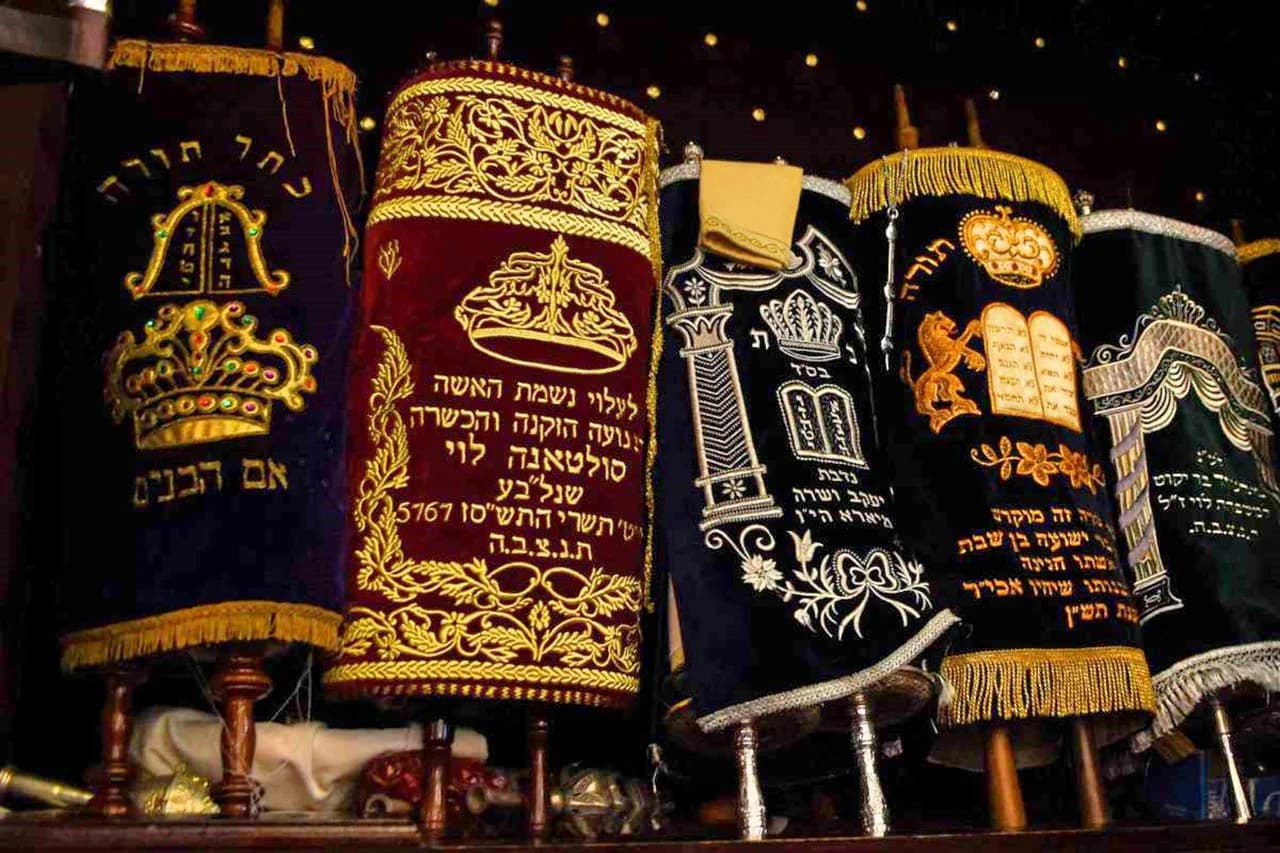
Collections highlight: Torah scrolls, Purim costumes, traditional Hanukkah menorot, photographs of mellah life, documents of the Sephardic exile
Location: Casablanca (Oasis neighborhood), accessible as part of a Casablanca day visit or city transfer
Meknes Jewish Quarter
The Meknes mellah, adjacent to the imperial palace, preserves significant Jewish architecture from the 17th-19th century Alaouite period. The mellah's distinctive high-walled alleys, the Slat Al Azama synagogue, and the Jewish cemetery are important heritage sites in this often-overlooked imperial city.
Sefrou & Demnate: Pilgrimage Sites
The small town of Sefrou near Fes, once called "Little Jerusalem" for its large pre-emigration Jewish community, and the town of Demnate in the Atlas foothills contain significant pilgrimage sites, ancient synagogues, and Jewish cemeteries that draw both Jewish pilgrims and heritage travelers annually.
Moroccan Jewish Music: The Andalusian Legacy
One of Morocco's most extraordinary Jewish legacies is the classical Andalusian music tradition — brought to Morocco by Iberian exiles in 1492 and preserved in parallel Jewish and Muslim forms. The Jewish piyutim (liturgical poems) of Morocco, sung in Hebrew-Arabic mixtures, are among the most distinctive musical traditions in the Jewish world. MSITravels can arrange private concert experiences with surviving Moroccan Jewish musicians in Fes and Casablanca.
MSITravels Jewish Heritage Tours
Private 5-day Jewish Morocco Heritage Circuit: Casablanca (Museum of Moroccan Judaism) → Meknes mellah → Fes mellah, Ibn Danan Synagogue, and cemetery → Sefrou → Marrakech Lazama Synagogue
Private extended 10-day circuit: adds Atlas Mountain Berber-Jewish cultural exchange sites, Essaouira Jewish quarter, and private meetings with community members
Pilgrimage tours to specific tzaddikim sites for Jewish pilgrims — timing around hiloula festival dates where possible
Aziz
Travel enthusiast and Morocco expert, sharing insights and stories from years of exploring Morocco's hidden gems and iconic destinations.
Ready to Explore Morocco?
Choose the experience that fits you best
Private Tour
A fully tailored Morocco experience crafted exclusively for you and your group.
View Private ToursSmall Group Tour
Join a curated group of like-minded travellers and discover Morocco together.
View Group ToursCustom Tour
Tell us your dream trip and we'll build a bespoke Morocco itinerary from scratch.
Tailor Your TourExplore More Stories
Discover more travel tips and inspiration for your Moroccan adventure
View All Articles