The Real Morocco vs. Tourist Morocco: What No One Tells You
Morocco runs two realities at once. Here is how to move between them, and why the difference changes everything.
Every country has a tourist face and a private one. In Morocco, the gap between the two is wider, stranger, and more beautiful than almost anywhere else on earth. The tourist version is polished, Instagram-ready, and genuinely impressive. The private version, the one that opens its doors slowly, on its own terms, will rearrange the furniture of your mind.
The MSITravels team has spent over a decade living in both worlds. This is our honest account of what each contains, and how to cross from one to the other.
Tourist Morocco: What Most Visitors Experience
Tourist Morocco is not a lie. It is a performance, and performances can be extraordinary. The snake charmers of Djemaa el-Fna have been coiling cobras in that square for centuries; the tanneries of Fes have dyed leather by hand since the eleventh century. These things are real. What changes is the frame around them.
The Curated Version
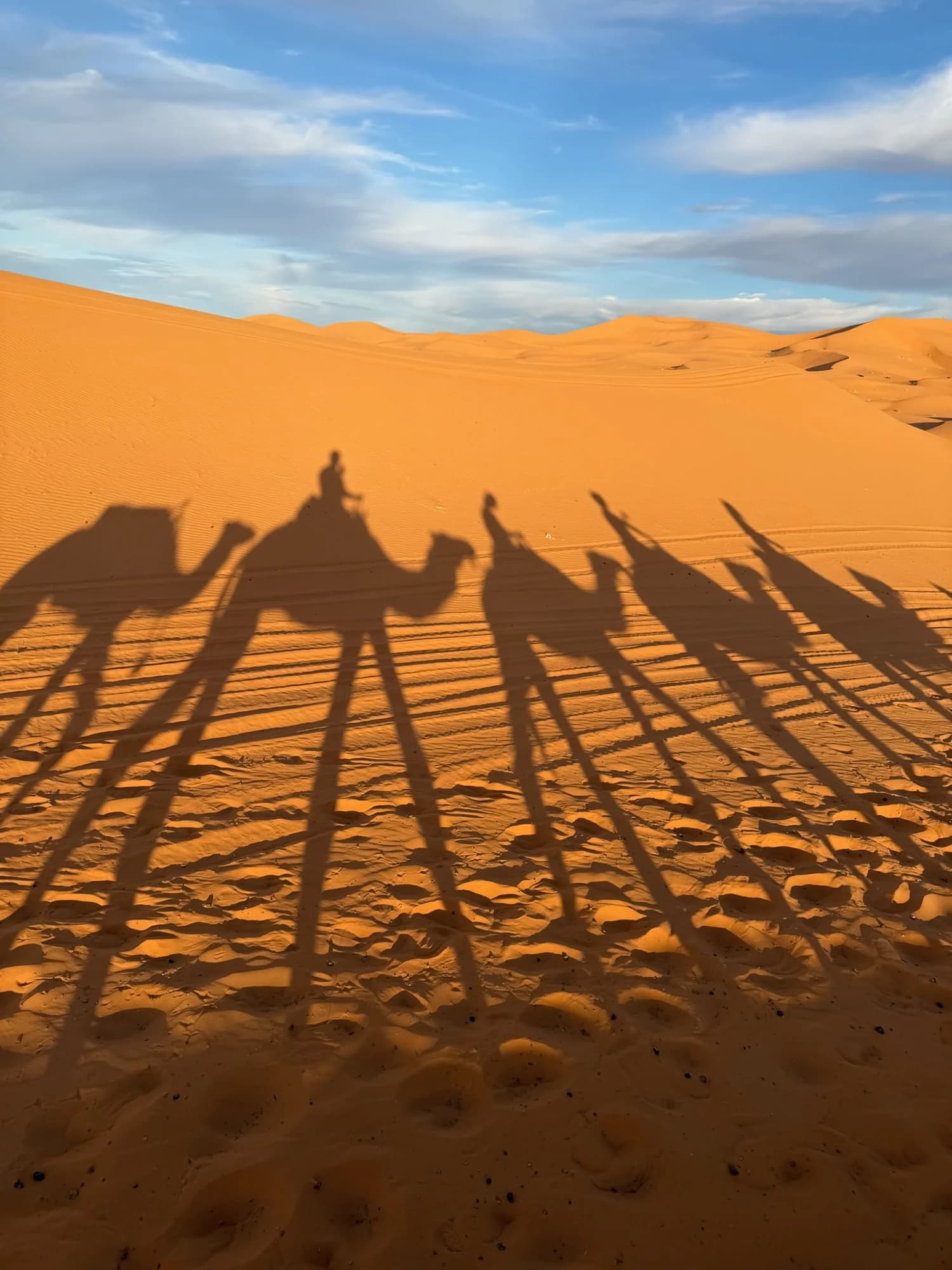
Cooking classes in renovated riads with Western kitchens. Camel photos at a designated Merzouga spot, fee included. Souk prices doubled before negotiation opens.
Why It Exists
Morocco receives tens of millions of visitors annually. A tourism industry scaled to that volume must standardise the experience, and standardisation, by definition, sands off the edges of the real.
"None of this is fake exactly, it is simply Morocco's tourism industry operating as tourism industries do globally. The question is whether you stop there."
A unique detail most visitors miss: the "faux guides" operating near the major medinas are an unofficial institution with their own internal hierarchy, territories, and commission networks. Many are genuinely knowledgeable, they simply have a financial relationship with certain shops that shapes every itinerary they suggest. Knowing this is not cynical. It is simply the map.
Real Morocco: What Runs Beneath and Alongside
Real Morocco does not hide. It simply does not announce itself. It is the neighbour who emerges from a door you did not know was there; the call to prayer that bends around a corner and stops you mid-sentence; the smell of bread from a communal oven you will never find on any app.
Hospitality as Architecture
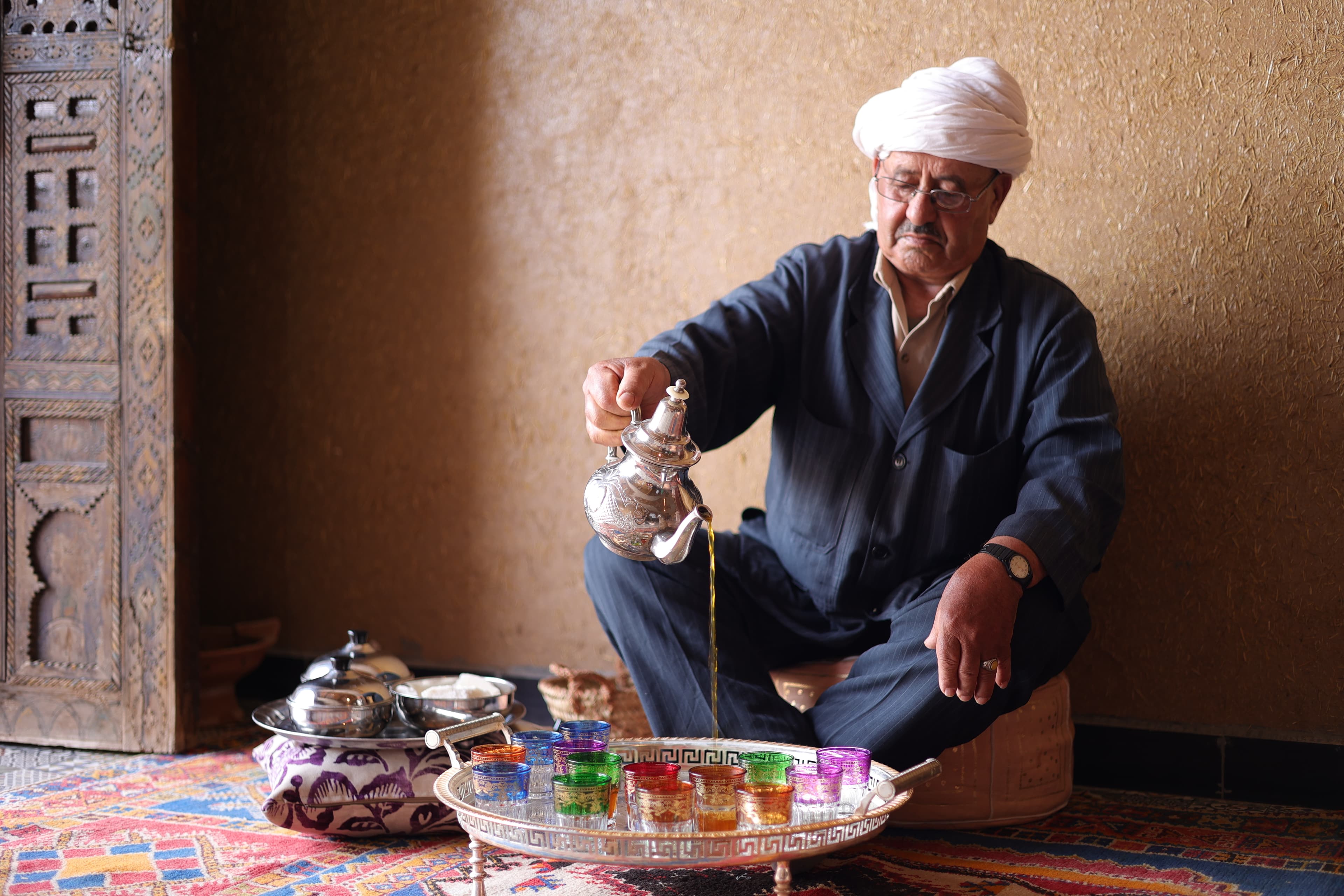
Moroccan hospitality - diaffa - is not a custom. It is closer to a structural element of the culture, like load-bearing walls. The obligation to receive a guest well predates the tourism industry by many centuries. When a family invites you for tea, the gesture carries real social weight: you are, briefly, under their protection. That changes the atmosphere of a room entirely.
Living Scholarship in the Oldest University on Earth
The University of al-Qarawiyyin in Fes was founded in 859 CE, the oldest continuously operating university in the world. Walk into the medina surrounding it at night and you may still find students bent over manuscripts beneath lamplight, studying Islamic jurisprudence in the same courtyard where scholars studied nine hundred years ago. No tour operator schedules this. It simply happens.
The Invisible Calendar
Morocco has a parallel calendar of moussems, regional festivals tied to saints' days, harvests, and ancient tribal gatherings. The Rose Festival in the Dadès Valley, the olive harvest in the Draa in November, the Imilchil Betrothal Moussem in the Atlas where Berber families have arranged marriages for generations, these events have no tourist infrastructure. They are not staged for outsiders. They are simply life, at full volume.
Gnawa: Music as Medicine
Gnawa music, rooted in the spiritual practices of West African communities brought to Morocco centuries ago, is not performed for tips. Its all-night healing rituals (lila) use specific rhythms, incense, and colours to address spiritual and psychological illness. What you hear in Djemaa el-Fna is the public surface. The practice goes much deeper, and it is still very much alive.
How the Gap Works, and How to Cross It
The gap is primarily one of trust, not money. Tourist Morocco is accessible to anyone with a plane ticket. Real Morocco opens when someone who belongs to a community vouches for you, when a guide who grew up in the Atlas introduces you to a family in their village, not as a tourist attraction, but as a guest of a friend.
At MSITravels, our guides are Moroccans, from Marrakech, from the Atlas, from Zagora, with families and social networks in the communities we visit. When our clients sit down to tea with a local family, it is because that family knows and trusts our guide, not because it has been staged. The distinction is felt immediately, and it is not subtle.
Practical Ways to Experience the Real Thing
Stay in family-run riads, not chain hotels, the owner's knowledge of their medina is an asset no concierge desk can replicate.
Eat well away from the main tourist squares. A small restaurant three streets back from Djemaa el-Fna will serve better food at a third of the price.
Visit a rural souk on market day, not the famous medina markets. Weekly country souks in towns like Rissani or Tiznit are working exchanges, not tourist attractions.
Ask your guide specifically to arrange meals with local families, and ask whether those families know the guide personally.
Travel in shoulder season: November through February (excluding Christmas week) is when tourist infrastructure recedes and Moroccan daily life becomes fully visible.
Allow for unplanned time. The best encounters in Morocco are almost always the ones that were not scheduled.
The Least-Touristy Corners of Morocco
Tafilalt Oasis: Ancient ksar villages near Erfoud, far from the Sahara-circuit crowds.
Draa Valley: East Remote Berber villages untouched by standard tour itineraries.
Middle Atlas (Azrou–Ifrane): Cedar forests, Barbary macaques, and Berber market towns with almost no tourist presence.
Atlantic North of Essaouira: Wild coast, fishing villages, argan cooperatives, a fraction of the visitors Marrakech absorbs.
Tata & Akka (Far South): Pre-Saharan oasis towns with Saharan rock art and almost zero tourist infrastructure.
MSITravels Team
Travel enthusiast and Morocco expert, sharing insights and stories from years of exploring Morocco's hidden gems and iconic destinations.
Ready to Explore Morocco?
Choose the experience that fits you best
Private Tour
A fully tailored Morocco experience crafted exclusively for you and your group.
View Private ToursSmall Group Tour
Join a curated group of like-minded travellers and discover Morocco together.
View Group ToursCustom Tour
Tell us your dream trip and we'll build a bespoke Morocco itinerary from scratch.
Tailor Your TourExplore More Stories
Discover more travel tips and inspiration for your Moroccan adventure
View All Articles