What to Pack for a Morocco Desert Tour: 2026 Sahara Packing Checklist
Planning a Morocco desert tour? Discover the complete 2026 packing checklist for Merzouga, Erg Chigaga, Marrakech, Fes, medinas, Atlas roads, desert camps, and Sahara weather.
Packing correctly for a Morocco desert tour means understanding one surprising truth: the Sahara is not simply “hot.” It can be intensely hot by day and genuinely cold at night, especially from late autumn to early spring. A summer afternoon near Merzouga can feel extreme, while a winter night at Erg Chigaga can become cold enough to require a fleece, warm socks, and proper bedding. Sand can damage cameras, long drives require comfortable clothing, and what works in the dunes is not always appropriate for Marrakech, Fes, or rural villages. This complete 2026 Morocco desert packing checklist from MSITravels is designed from years of guiding travelers through Morocco’s two main desert regions: the Merzouga dunes of Erg Chebbi and the wilder Erg Chigaga desert beyond M’hamid.
A Morocco desert tour is one of the most unforgettable travel experiences in North Africa. You may cross the High Atlas Mountains, visit Ait Benhaddou, travel through the Dades Valley or Todgha Gorges, follow palm-filled valleys, pass kasbahs, drink tea in a desert village, ride a camel or take a 4x4 to your camp, climb dunes at sunset, sleep under a sky full of stars, and wake up to a silence that feels almost impossible in modern life.
But the beauty of the Sahara also comes with practical realities. The desert has strong sun, dry wind, fine sand, limited shade, long distances, and temperature changes that surprise many travelers. Packing well does not mean bringing more. It means bringing the right items.
At MSITravels, we regularly see two types of packing mistakes. Some travelers overpack as if they are going on an expedition and end up struggling with heavy luggage in medinas, riad staircases, and desert vehicles. Others underpack because they imagine Morocco as hot all year and forget that desert evenings, mountain passes, and early mornings can be cold. The best approach is balance: light luggage, versatile layers, sun protection, comfortable shoes, modest city clothing, and a small set of essential accessories.
This guide will help you prepare for every part of your Morocco desert journey, from Marrakech or Fes to the Sahara, from riads to desert camps, from medinas to dunes, and from hot afternoons to chilly nights.
Understanding the Morocco Desert Before You Pack
Before choosing clothes, shoes, toiletries, or camera equipment, it is important to understand the kind of journey most Morocco desert tours involve. The Sahara portion is only one part of the experience. Most travelers do not fly directly into the dunes. They usually start in Marrakech, Fes, Casablanca, or another city, then travel through mountains, valleys, villages, and desert gateways before reaching camp.
A typical Marrakech to Merzouga desert tour may include the High Atlas Mountains, the Tizi n’Tichka pass, Ait Benhaddou, Ouarzazate, the Valley of Roses, Dades Valley, Todgha Gorges, Erfoud, Rissani, and finally the dunes of Erg Chebbi near Merzouga.
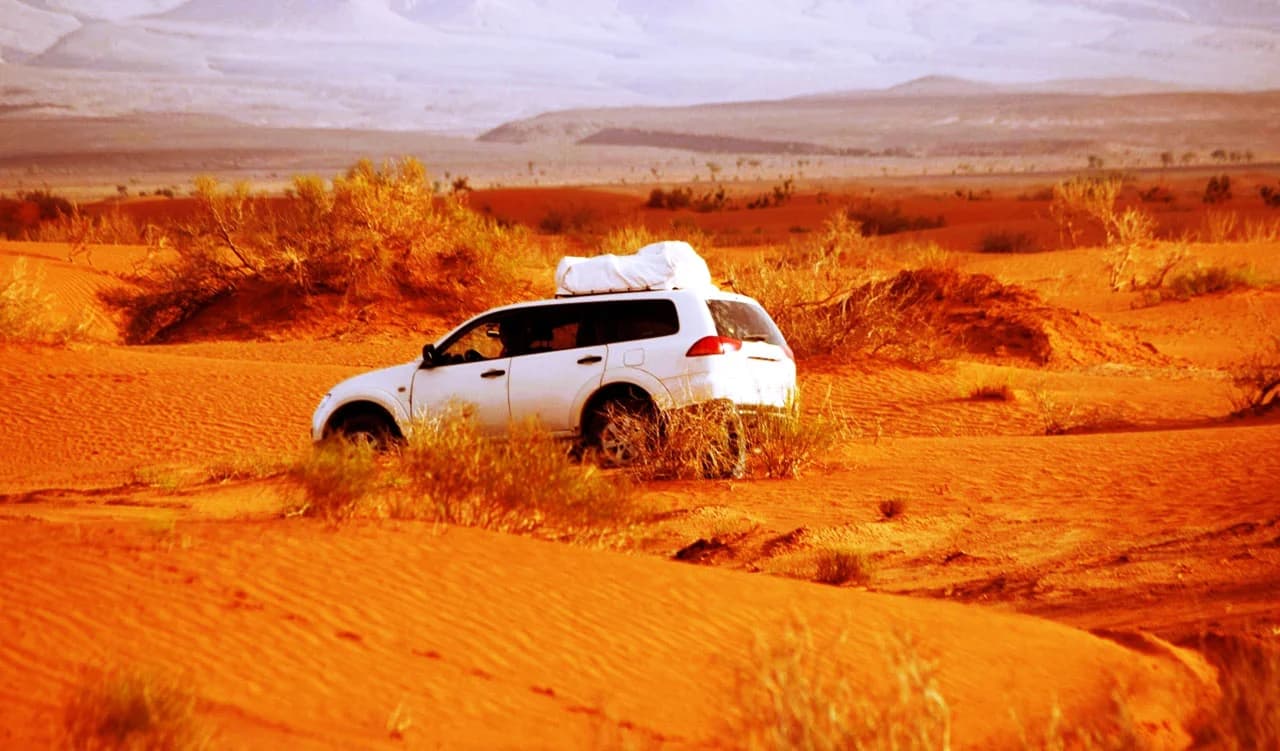
A journey to Erg Chigaga often includes the Draa Valley, Agdz, Zagora, Tamgroute, M’hamid el-Ghizlane, and a 4x4 route into a more remote desert landscape. Erg Chigaga is less developed and more isolated than Merzouga, which makes it spectacular for travelers looking for a wilder Sahara experience.
This matters for packing because your clothing must work in different environments. You may need a light shirt for Marrakech, modest trousers for a medina, a warm jacket for the desert night, walking shoes for a rocky viewpoint, sandals for camp, and a scarf to protect your face from wind and sand.
The desert is not just one climate. It changes by season, by time of day, and by location.
Merzouga is more accessible and has more camps, guesthouses, and services. Mobile coverage is often better, and the dunes are easier to reach. Erg Chigaga is more remote, reached by 4x4, with fewer services and a stronger sense of wilderness. Both require good packing, but Erg Chigaga requires travelers to be slightly more prepared because there are fewer shops and facilities nearby.
The most important principle is this: pack for heat, cold, dust, modesty, comfort, and movement.
The Desert Temperature Paradox: Hot Days, Cold Nights
Many first-time travelers imagine the Sahara as permanently hot. This is only partly true. During the day, especially from May to September, the desert sun can be very strong. In July and August, temperatures can become extremely high, particularly around Merzouga and the wider southeast. But once the sun disappears, the temperature can drop quickly.
From October to April, desert nights can be surprisingly cold. In winter, especially December, January, and February, early mornings and late evenings may require a warm jacket, fleece, hat, and socks. Even in spring and autumn, travelers often feel cold after sunset if they packed only summer clothing.
This is one of the most common mistakes MSITravels clients make before we advise them properly. They pack for the photos they have seen, golden dunes, blue skies, flowing dresses, and sun hats, but forget the reality of sitting outside at night, drinking tea around a fire, walking from the dining tent to the sleeping tent, or waking early for sunrise.
For this reason, layering is essential.
Instead of packing one heavy coat and many summer outfits, bring a small number of versatile layers that can be combined. A lightweight long-sleeve shirt, a breathable t-shirt, a fleece, and a wind-resistant jacket can cover many situations. In winter, a lightweight down jacket or insulated layer is very useful. In summer, you may not need heavy layers, but a light cover-up is still useful for air-conditioned vehicles, early mornings, and modest city visits.
The desert also has wind. A cold desert wind can feel much colder than the temperature suggests. A scarf or tagelmust-style wrap is not only beautiful in photos; it is practical protection against sun, sand, and wind.
Essential Clothing for Daytime Desert Travel
For daytime desert travel, your clothes should protect you from the sun while keeping you cool and comfortable. Many travelers assume short sleeves and shorts are best in hot weather, but in the Sahara, lightweight long sleeves and loose trousers are often better. They protect the skin from UV exposure, reduce direct heat, and help prevent sunburn.
Pack two or three lightweight long-sleeve shirts made from linen, cotton blend, or quick-dry fabric. Linen is breathable and comfortable, though it wrinkles easily. Quick-dry travel fabric is practical for multi-day tours because it can be washed and dried more easily. Avoid thick cotton shirts that hold sweat and dry slowly.
Loose trousers are strongly recommended. They are more comfortable for long drives, camel riding, village visits, and windy desert conditions. Convertible trousers can work well for travelers who like practical clothing, but simple loose cotton or linen trousers are often more comfortable and more attractive in photos.
Shorts can be worn at some desert camps, especially private or luxury camps, but they are less appropriate for village stops and are usually less comfortable for camel riding. If you bring shorts, treat them as camp or hotel wear, not your main travel clothing.
A wide-brimmed sun hat is one of the most important items you can bring. Baseball caps protect the face but not the neck. A proper hat with a brim gives much better protection during dune walks, roadside stops, and outdoor lunches. Choose one that stays secure in wind.
Sunglasses with strong UV protection are essential. Desert light can be intense, especially when reflected by sand and pale stone. Cheap sunglasses without good UV protection are not enough. Choose comfortable sunglasses that you can wear for several hours.
For footwear, bring comfortable enclosed walking shoes or trail runners. You do not need heavy hiking boots for most Morocco desert tours unless your itinerary includes serious trekking, but you do need supportive shoes for uneven ground, rocky viewpoints, kasbah steps, and walking toward the dunes. Sandals are useful at camp, but they should not be your only footwear.
What to Wear in the Desert Camp
A Morocco desert camp is usually relaxed, but comfort still matters. During the day, light clothing works well. In the evening, layers become important. Many travelers enjoy wearing something comfortable and slightly warmer after sunset, especially when sitting outside for dinner, music, or stargazing.
For camp, pack:
A comfortable long-sleeve top or light sweater.
Loose trousers or warm leggings.
A fleece or lightweight jacket.
Warm socks for sleeping or walking around at night.
Sandals or slip-on shoes for moving between tents.
A scarf or wrap for wind.
If you are staying in a luxury desert camp, bedding is normally provided, and you do not need a sleeping bag. MSITravels works with camps that provide warm blankets and proper bedding. However, warm sleeping clothes are still useful in winter, especially if you get cold easily.
At many desert camps, electricity may be limited, solar-powered, or available only during certain hours. This affects what you wear and carry at night. A headlamp or small torch is very useful for walking safely between your tent, bathroom, and dining area after dark.
A desert camp is not a fashion show, but it is also one of the most photographed parts of a Morocco tour. If you want beautiful photos, choose clothing that is practical but also visually comfortable for you. Earth tones, white, cream, soft blue, olive, and terracotta often photograph beautifully in the desert. Avoid clothing that is too tight, too delicate, or difficult to move in.
Clothing for Marrakech, Fes, and Moroccan Medinas
Packing for Morocco is not only about the Sahara. Most desert tours include cities such as Marrakech or Fes, and the clothing expectations in medinas are different from those at desert camps.
Morocco is a welcoming country, and travelers are not expected to dress like locals. However, modest clothing is appreciated, especially in traditional areas, rural villages, religious neighborhoods, and family settings. Dressing respectfully also helps reduce unwanted attention and makes interactions more comfortable.
For women, the best options are loose trousers, long skirts, maxi dresses, tunics, lightweight shirts, and tops that cover the shoulders. A light cardigan or scarf is useful for entering conservative areas or covering shoulders when needed. A scarf can also be useful for sun protection, wind, or visiting certain religious or cultural sites.
Women do not need to cover their hair in most public places in Morocco. However, carrying a scarf is practical and respectful if visiting certain religious sites or rural homes.
For men, long trousers are recommended for medina visits, religious areas, and village stops. T-shirts are usually fine, but sleeveless tops are less appropriate in traditional areas. Shorts are acceptable in some tourist settings, but trousers are a better choice for cultural tours.
For both men and women, avoid very revealing clothing in medinas. Very short shorts, low-cut tops, transparent fabrics, and tight outfits may attract attention and may feel uncomfortable in traditional spaces.
Shoes are especially important in medinas. Marrakech and Fes both involve uneven streets, cobblestones, steps, and narrow alleys. Fes in particular can be difficult underfoot. Comfortable flat shoes are essential. Do not bring heels for medina walking. Even stylish evening venues are usually better reached with comfortable shoes because riads and restaurants may require walking through old streets.
In beach destinations such as Essaouira, Agadir, or Asilah, clothing expectations are more relaxed. Western beachwear is normal at beaches and hotel pools, though it is still better to cover up when walking through town.
Seasonal Packing Guide for Morocco Desert Tours
The best packing list depends heavily on the season of travel.
Spring: March, April, and May
Spring is one of the best times for a Morocco desert tour. Days are usually warm, flowers may appear in valleys, and the weather is generally pleasant. However, nights can still be cool, especially in March and early April.
Pack lightweight daytime clothing, a fleece or light down jacket, a scarf, sunglasses, sunscreen, and comfortable shoes. Spring travelers often make the mistake of packing only warm-weather clothes. Do not skip the evening layer.
Summer: June, July, August, and Early September
Summer in the Moroccan desert can be extremely hot. Many travelers still visit, but itineraries must be planned carefully, with early starts, shaded breaks, air-conditioned transport, and limited outdoor activity during peak heat.
Pack very breathable clothing, long sleeves for sun protection, a wide-brimmed hat, strong sunscreen, electrolyte sachets, sunglasses, and light evening clothing. You may not need a heavy jacket, but a thin layer is still useful for air-conditioned vehicles or early starts.
Avoid tight jeans, heavy fabrics, dark synthetic clothing, and shoes that cause sweating or blisters.
Autumn: Late September, October, and November
Autumn is another excellent season for desert travel. Days are warm but usually more comfortable than summer, while evenings begin to cool. October and November are especially popular for Morocco tours.
Pack both warm-weather clothing and a proper evening layer. A fleece, light jacket, scarf, and warm socks are recommended. This is a season where travelers often feel comfortable during the day but cold after dinner at camp.
Winter: December, January, and February
Winter desert travel can be magical: clear skies, fewer crowds, beautiful light, and crisp evenings. But nights can be genuinely cold. If you are traveling in winter, pack seriously for evening comfort.
Bring a warm fleece or lightweight down jacket, long trousers, warm socks, sleeping layers, a scarf, and possibly a warm hat. During the day, the sun can still be strong, so sunscreen and sunglasses remain essential.
Winter also means mountain roads can be colder, especially when crossing the High Atlas Mountains. A jacket is necessary not only for the desert but also for high-altitude stops.
Toiletries and Health Essentials
Good toiletries and health basics can make a Morocco desert tour much more comfortable. You do not need to overpack, but a few items are extremely useful.
High-SPF sunscreen is non-negotiable. Choose SPF 50 or higher and apply it even in winter. Desert UV can be strong, and sand reflection increases exposure. Apply sunscreen to your face, neck, ears, hands, and any exposed skin. Many travelers forget the back of the neck, especially during camel rides or dune walks.
Lip balm with SPF is also essential. Desert wind and sun can dry lips quickly. A normal lip balm without sun protection is less effective.
Bring a small bottle of hand sanitizer. In cities and restaurants, handwashing is usually available, but during desert drives, roadside stops, and camp activities, sanitizer is useful.
Rehydration sachets or electrolyte tablets are strongly recommended, especially in warmer months. Dehydration can happen gradually and may not feel obvious at first. Headaches, tiredness, dizziness, and irritability can all come from not drinking enough water.
Bring basic medication such as painkillers, stomach medication, antihistamines, and any personal prescriptions. If you take prescription medication, carry it in original packaging and bring a copy of your prescription or doctor’s letter, especially for international travel.
A small first aid kit is useful. Include blister plasters, antiseptic wipes, small bandages, and any personal medical items. Medina walking, uneven paths, and new shoes can cause blisters, so blister protection is more useful than many travelers expect.
Insect repellent may be useful near oases, gardens, riads, or certain valleys. Mosquitoes are usually less of a problem in the open desert but can appear near water sources or in warmer seasons.
Moisturizer is helpful because the desert air is dry. A small face moisturizer or body lotion can make evenings more comfortable.
Tissues or small toilet paper packs are useful for roadside stops. Many places provide facilities, but carrying your own is practical.
Electronics and Photography Gear
Morocco is extremely photogenic. The Sahara, medinas, kasbahs, mountain roads, riads, souks, and villages all invite photography. But desert conditions can be harsh on electronics.
Fine sand is one of the greatest dangers for cameras. It can enter lenses, buttons, screens, and camera bodies. If you use a DSLR or mirrorless camera, bring a protective case, dry bag, or sealable plastic bag. On windy dune days, keep your camera protected when not actively shooting. Avoid changing lenses in the open desert, especially when wind is blowing.
A lens cloth and small blower brush are very useful. Clean your lens carefully and regularly, but avoid rubbing sand across glass. First remove particles with a blower if possible.
A smartphone is usually enough for many travelers, but phones also need protection. Use a secure case and avoid placing your phone directly in sand. Keep it in a zipped pocket or bag.
A portable power bank is essential. Choose a strong one, ideally 20,000 mAh or more, especially if you use your phone for photos, video, maps, and messaging. Desert camps may have limited or shared charging points. A power bank gives you independence.
Bring a universal travel adapter. Morocco uses European-style plugs, commonly Type C and E, with 220V electricity. Most modern phone and camera chargers work with 220V, but check your devices before travel.
Download offline maps before your tour. Google Maps offline can help in major areas, while Maps.me is often useful for offline navigation. However, do not rely only on apps in medinas or remote desert areas. Your MSITravels driver and guide will manage the route, but offline maps are still useful for orientation.
A headlamp or small torch is useful for desert camps, especially at night. It is better than using your phone flashlight because it keeps your hands free and saves phone battery.
If you use drones, check current Moroccan regulations before traveling. Drone import and use are restricted in Morocco, and travelers should not assume they can bring or operate one freely.
Luggage: Suitcase or Duffel?
For Morocco, especially if your tour includes medinas and desert camps, soft-sided luggage is often easier than a hard rolling suitcase.
Rolling suitcases can be difficult in old medinas because of cobblestones, narrow lanes, stairs, and uneven paths. Many riads are located inside pedestrian areas where vehicles cannot stop directly at the door. Staff can often help with luggage, but a large hard suitcase is still less practical.
A soft-sided duffel, holdall, or medium travel bag is usually ideal. It fits more easily in vehicles, is easier to carry through riad entrances, and works better for desert logistics. A backpack can also work well, but avoid overpacking it.
For the desert night, bring a small overnight bag or day backpack. You may not need to take your main luggage into the desert camp, especially if access involves camel ride or 4x4 transfer. Pack your overnight essentials separately: warm layer, toiletries, phone charger, camera, medicine, sleepwear, and fresh clothes.
Keep important documents, medication, electronics, and valuables in your day bag, not in checked luggage or the main vehicle luggage area.
The best luggage strategy is simple: one main soft bag plus one small day backpack.
What MSITravels Provides So You Do Not Need to Pack It
When you travel on a private Morocco desert tour with MSITravels, many practical items are already arranged for you. This helps you avoid overpacking.
At desert camps, bedding and warm blankets are provided. You do not need to bring a sleeping bag for standard or luxury desert camp stays arranged by MSITravels.
Water is provided throughout the tour according to your itinerary and service level, so you do not need to pack heavy water supplies from home. You may still want a reusable water bottle for convenience and to reduce plastic use.
Your driver and local team will help with route logistics, timing, camp arrival, and luggage movement. You do not need expedition equipment for a normal Morocco desert tour.
If you do not have a desert scarf or tagelmust-style wrap, MSITravels can help you purchase one locally or arrange one before your camel trek, depending on the itinerary. These scarves are practical, culturally connected, and useful for sun, wind, and sand.
In many cases, MSITravels can also advise you before arrival based on your exact travel dates and route. Packing for Erg Chigaga in January is different from packing for Merzouga in September. A tailor-made tour allows us to guide you more specifically.
What Not to Bring to Morocco
Knowing what not to pack is just as important as knowing what to bring.
Do not bring heavy rolling luggage if you can avoid it. It is not ideal for medinas, riads, or desert logistics.
Do not bring expensive jewelry or obvious luxury watches. Morocco is generally safe for travelers, but visible valuables can attract unnecessary attention in busy areas.
Do not bring too much cash from home. ATMs are widely available in major cities and towns, and exchange options are available in Morocco. Carry some emergency cash, but do not travel with large amounts unless advised for a specific route.
Do not bring too many clothes. Laundry can often be arranged during longer tours, and versatile layers are better than separate outfits for every day.
Do not pack high heels for medina walking. They are impractical on cobblestones and stairs.
Do not bring tight jeans as your main travel trousers. Long drives, warm weather, and camel saddles make tight jeans uncomfortable.
Do not bring delicate shoes that cannot handle dust. Morocco is beautiful, but it is also dusty, sandy, and uneven in many places.
Do not bring a drone unless you have confirmed current legal requirements and permissions. Drone rules in Morocco are strict, and unauthorized drones can create serious problems at customs.
Do not bring a large hard-shell suitcase if your itinerary includes many riads. Smaller, softer luggage makes the entire trip easier.
Packing for Camel Riding
Many desert tours include the option of camel riding, especially at sunset or sunrise. Even if the ride is short, the right clothing makes a big difference.
Wear long trousers, not shorts. Camel saddles and blankets can rub against the skin, and trousers offer better comfort and modesty. Loose trousers are ideal.
Wear closed shoes or secure sandals. Flip-flops can fall off or become uncomfortable. Many travelers remove shoes once they reach the soft dunes, but you need proper footwear for getting on and off the camel and walking around camp.
Bring a scarf or wrap to protect your face and neck. Wind can pick up quickly, and sand can become uncomfortable.
Keep your phone or camera secure. Do not hold loose items while mounting or dismounting. A zipped pocket or small crossbody bag is useful.
If you do not want to ride a camel, MSITravels can often arrange 4x4 transfer to camp instead, depending on the location and camp type. Many travelers choose this option for comfort, mobility reasons, or ethical preferences.
Packing for Long Drives
A Morocco desert tour often includes long but scenic drives. Distances between Marrakech, the Atlas Mountains, Dades, Merzouga, Zagora, Erg Chigaga, and Fes can be significant. The journey is part of the experience, but comfort matters.
For long drives, wear loose clothing and comfortable shoes. Bring a light layer in the vehicle because air conditioning can feel cool after desert heat. Keep sunglasses, water, lip balm, tissues, and your phone charger in your day bag.
A neck pillow can be useful for some travelers, especially on longer routes. Motion sickness tablets may help if you are sensitive to winding mountain roads, particularly in the High Atlas.
Snacks are optional. Morocco has many roadside cafés and stops, but travelers with dietary needs may want to carry protein bars, nuts, or personal snacks.
Keep your camera ready but protected. Some of the most beautiful views happen between destinations: mountain passes, palm valleys, kasbahs, villages, and desert plateaus.
Packing for Responsible and Respectful Travel
At MSITravels, we believe packing is not only about comfort. It is also about respect.
Morocco is culturally diverse, with Arab, Amazigh, Saharan, Andalusian, Jewish, African, and Mediterranean influences. Urban areas can feel modern and relaxed, while rural villages may be more traditional. Dressing modestly in medinas and villages shows cultural awareness and often leads to warmer interactions.
Respectful packing also means reducing waste where possible. Bring a reusable water bottle if you can. Avoid excessive single-use plastic. Carry a small tote bag for shopping instead of accepting plastic bags. Choose reef-safe or eco-conscious toiletries if your trip includes coastal areas.
If you plan to visit cooperatives, villages, or local families, avoid clothing that feels too revealing or flashy. Simple, comfortable, modest clothing is best.
Responsible travel also means being careful with photography. Do not photograph people, especially women, children, artisans, or rural families, without permission. Pack your camera, but also pack patience and respect.
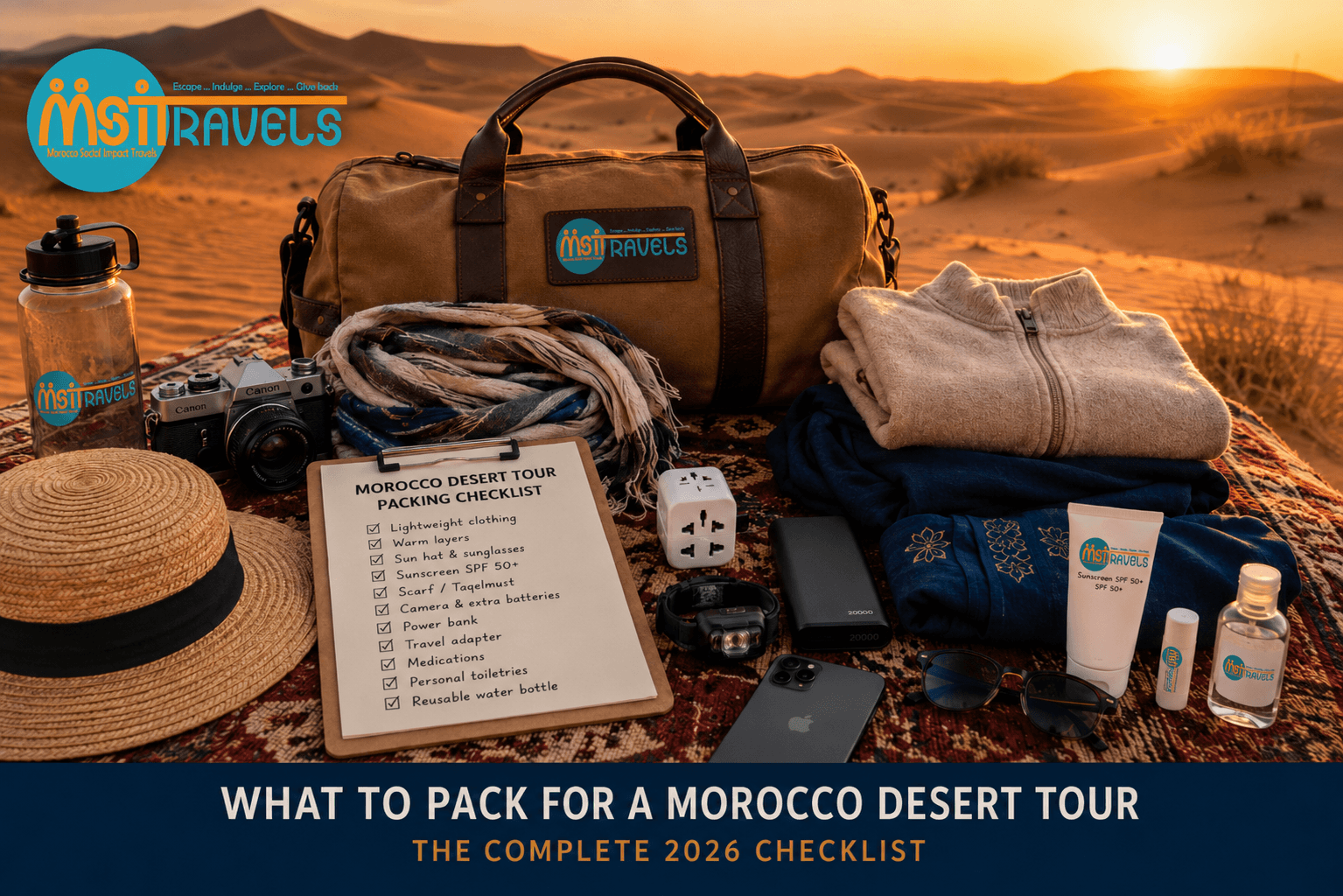
The Complete Morocco Desert Tour Packing Checklist
Clothing
Lightweight long-sleeve shirts
Breathable t-shirts
Loose trousers or travel pants
Optional maxi skirt or loose dress
Fleece or lightweight down jacket
Light cardigan or shawl
Warm socks
Comfortable sleepwear
Underwear and breathable socks
Swimwear for riads, hotels, or pools
Light rain jacket if traveling in winter or mountains
Scarf or tagelmust-style wrap
Wide-brimmed sun hat
Shoes
Comfortable walking shoes or trail runners
Sandals or slip-on shoes for camp
Optional nicer flat shoes for dinners
Avoid heels and uncomfortable new shoes
Toiletries and Health
SPF 50+ sunscreen
Lip balm with SPF
Moisturizer
Hand sanitizer
Tissues or small toilet paper packs
Basic medication
Prescription medication in original packaging
Electrolyte sachets
Insect repellent
Blister plasters
Small first aid kit
Wet wipes
Toothbrush and toothpaste
Personal hygiene products
Electronics
Phone and charger
Camera and charger
Power bank, ideally 20,000 mAh
Universal travel adapter
Lens cloth
Camera dry bag or protective pouch
Headlamp or small torch
Downloaded offline maps
Extra memory card if using a camera
Earbuds or headphones for long drives
Documents and Money
Passport
Travel insurance details
Booking confirmation
Emergency contact information
Credit or debit cards
Some cash in Moroccan dirhams
Copies of important documents
Prescription letter if needed
Day Bag Essentials
Water bottle
Sunscreen
Sunglasses
Scarf
Phone
Power bank
Medication
Tissues
Hand sanitizer
Camera
Light layer
Snacks if needed
Common Packing Mistakes MSITravels Clients Make
The first common mistake is bringing only summer clothing. Even when Morocco is warm during the day, desert nights can become cold. This is especially true from October to April. A warm layer is essential.
The second mistake is forgetting sun protection. Sunscreen, sunglasses, and a proper hat are not optional in the Sahara. The sun can be strong even when the air feels cool.
The third mistake is bringing the wrong shoes. Morocco involves more walking than many travelers expect. Medina streets, kasbah steps, rocky viewpoints, and desert paths require comfortable footwear.
The fourth mistake is overpacking. Large suitcases make the trip harder, especially in riads and medinas. A lighter bag gives you more freedom.
The fifth mistake is failing to protect cameras. Fine sand can damage expensive equipment quickly. A simple dry bag or protective pouch can save your camera.
The sixth mistake is relying entirely on card payments. Cards are accepted in many hotels and larger shops, but cash is still useful for small purchases, tips, markets, and remote areas.
The seventh mistake is packing clothing that works for the desert but not for medinas. A Morocco tour usually includes both. You need practical desert clothing and respectful city clothing.
Expert Insight from Aziz, Founder of MSITravels
“After many years of guiding travelers through Morocco, I always tell our clients that packing for the Sahara is not about bringing everything. It is about bringing the right things and leaving enough space for the experience.
People often ask about shoes, jackets, cameras, and scarves, and of course these are important. But the most important thing to bring to Morocco is flexibility. Sometimes the most beautiful moment is not written in the itinerary. It may be a family lunch in the Atlas Mountains, a conversation with a local artisan, a sudden music session at the desert camp, or a stop on the road because the sunset is too beautiful to ignore.
Pack light in your luggage, but leave room in your mind and heart. Morocco rewards travelers who are prepared, respectful, and open to surprise.”
Final Advice: Pack Light, Pack Smart, and Pack for Contrast
A Morocco desert tour is a journey of contrasts. You may begin in the lively streets of Marrakech, cross snowy or windy mountain passes, visit ancient kasbahs, drive through palm valleys, arrive in the Sahara heat, then sit under a cold night sky wrapped in a blanket. You may walk through traditional medinas one day and climb golden dunes the next.
That is why the perfect Morocco packing list is not about one climate or one style. It is about flexibility.
Bring modest clothing for cities. Bring breathable layers for the desert. Bring a warm jacket for evenings. Bring comfortable shoes for walking. Bring sun protection for every season. Bring a power bank for remote areas. Bring a scarf for wind, sand, sun, and cultural respect. Bring less luggage than you think you need.
MSITravels has guided more than 4,000 travelers from the USA, UK, Canada, and beyond through Morocco. Our team designs private Morocco tours, Sahara desert journeys, small group tours, family trips, honeymoon packages, senior-friendly itineraries, women-only tours, student adventures, and fully tailor-made experiences across the country.
When you travel with MSITravels, we help you prepare for the real Morocco — not only the postcard version, but the roads, seasons, villages, medinas, camps, and human encounters that make the journey unforgettable.
To plan your Morocco desert tour, visit MSITravels.com and explore our private tours, small group tours, Sahara Desert packages, romantic itineraries, and custom Morocco travel options. We would be honored to help you prepare for a journey that is comfortable, meaningful, and beautifully planned from beginning to end.
MSITravels Team
Travel enthusiast and Morocco expert, sharing insights and stories from years of exploring Morocco's hidden gems and iconic destinations.
Ready to Explore Morocco?
Choose the experience that fits you best
Private Tour
A fully tailored Morocco experience crafted exclusively for you and your group.
View Private ToursSmall Group Tour
Join a curated group of like-minded travellers and discover Morocco together.
View Group ToursCustom Tour
Tell us your dream trip and we'll build a bespoke Morocco itinerary from scratch.
Tailor Your TourExplore More Stories
Discover more travel tips and inspiration for your Moroccan adventure
View All Articles