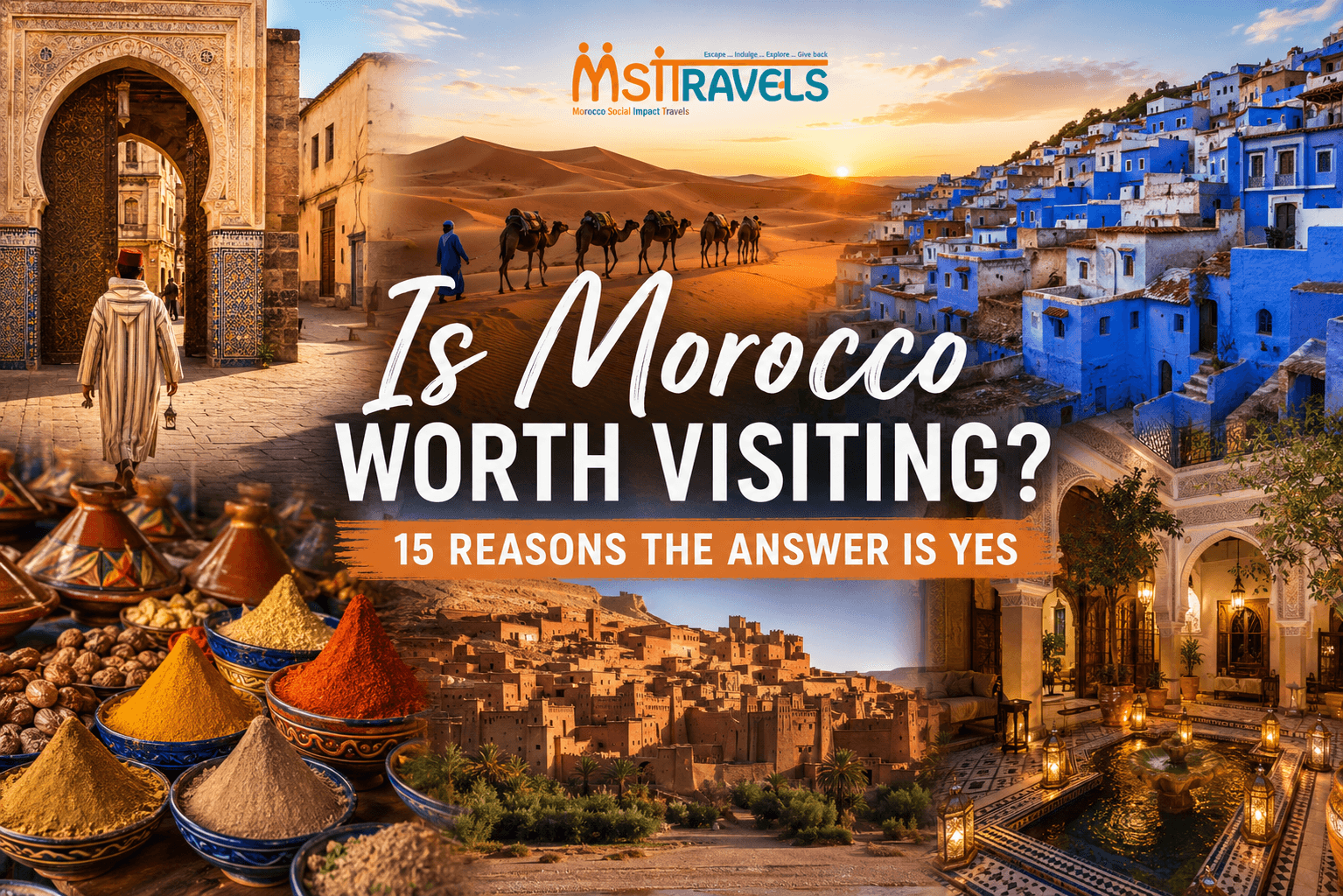
Is Morocco Worth Visiting? 15 Reasons to Visit Morocco in 2026 and Beyond
Is Morocco worth visiting? Discover 15 powerful reasons to visit Morocco, from ancient medinas and Sahara desert camps to riads, food, safety, value, culture, and responsible travel with MSITravels.
Morocco is absolutely worth visiting. For travelers from the USA, Canada, the UK, Europe, Australia, and beyond, Morocco offers a rare combination that few destinations can match: ancient living medinas, the Sahara Desert, the Atlas Mountains, Atlantic coast towns, world-class riads, remarkable food, deep cultural history, warm hospitality, strong value, and extraordinary visual beauty. It is a destination where you can walk through a medieval city in the morning, cross mountain landscapes by afternoon, and sleep under Saharan stars within the same journey. MSITravels has guided more than 4,000 travelers through Morocco, and one thing is clear: people do not simply visit Morocco once and forget it. They remember it, talk about it, and often return because the country has more depth than one trip can hold.
Many people ask, “Is Morocco worth visiting?” because they feel curious but uncertain. They may have seen photos of Marrakech rooftops, Chefchaouen’s blue streets, Fes medina, Sahara camel caravans, and riad courtyards, but they wonder what the reality is like. Is it safe? Is it comfortable? Is the food good? Is it too chaotic? Is the desert really worth the drive? Will the medinas feel overwhelming? Is Morocco suitable for couples, families, senior travelers, solo women, honeymooners, or first-time visitors to North Africa?
The honest answer is this: Morocco is not a destination for travelers who want every day to feel predictable. It is vivid, layered, energetic, emotional, and sometimes intense. But that is exactly why it is so memorable. Morocco is not only a place you see. It is a place you feel — through sound, color, scent, conversation, food, architecture, landscape, and human warmth.
At MSITravels, we believe Morocco is one of the most rewarding travel destinations in the world when it is planned properly. With the right itinerary, the right pace, the right guide, and the right expectations, Morocco can become one of the best journeys of your life.
Here are 15 reasons why Morocco is absolutely worth visiting.
1. Morocco Offers Extraordinary Variety in One Journey
One of Morocco’s greatest strengths is its landscape diversity. Many countries offer beautiful cities. Others offer mountains, beaches, or deserts. Morocco offers all of them in one compact and highly memorable journey.
In a single 10-day Morocco itinerary, you can experience:
The historic medina of Marrakech.
The High Atlas Mountains.
Ait Benhaddou and old kasbah architecture.
The Dades Valley or Todgha Gorges.
The Sahara Desert at Merzouga or Erg Chigaga.
The ancient city of Fes.
Chefchaouen’s blue mountain streets.
Rabat’s elegant Atlantic history.
Essaouira’s relaxed coastal atmosphere.
This variety makes Morocco especially appealing for travelers who want a trip that feels rich and dynamic. You are not seeing the same type of landscape every day. Each region changes the mood of the journey.
Marrakech feels colorful and theatrical.
Fes feels ancient and intellectual.
The Atlas Mountains feel dramatic and grounded.
The Sahara feels silent and almost timeless.
Essaouira feels breezy, artistic, and calm.
Chefchaouen feels soft, blue, and mountain-framed.
This contrast keeps the trip alive from beginning to end. Many travelers tell us they expected Morocco to be beautiful, but they did not expect it to feel like several destinations inside one country.
That is one of the reasons Morocco is worth the flight.
2. The Medinas Are Among the Most Fascinating Urban Spaces in the World
Morocco’s medinas are not ordinary old towns. They are living historic cities filled with homes, workshops, markets, mosques, fountains, bakeries, schools, riads, hammams, and generations of daily life.
Fes el-Bali is one of the most extraordinary medinas in the world. Its narrow alleys, craft districts, madrasas, tanneries, old fountains, and hidden courtyards create an urban experience unlike anything most travelers have seen before. Walking through Fes with a licensed local guide is not simply sightseeing. It is time travel into a city that still functions through patterns established centuries ago.
Marrakech medina offers a different kind of energy. It is more theatrical, more colorful, more outward-facing, and more immediately accessible. Djemaa el-Fna, the souks, Bahia Palace, the Koutoubia area, hidden fondouks, spice stalls, lantern shops, rooftop cafés, and riad courtyards create one of the most sensory urban experiences in North Africa.
The medinas can feel overwhelming at first. That is why a good guide matters. With a skilled MSITravels guide, the maze becomes meaningful. You begin to understand how the city is organized, why certain crafts are grouped together, how Moroccan architecture works, and how everyday life continues inside these historic walls.
If you love history, culture, architecture, photography, markets, food, or old cities, Morocco’s medinas alone make the country worth visiting.
3. The Sahara Desert Is Real, Accessible, and Unforgettable
For many travelers, the Sahara Desert is the dream that brings them to Morocco. The idea of golden dunes, camel silhouettes, luxury desert camps, campfire music, and stars above the sand feels almost mythical before arrival.
Then you see it.
The Sahara is not just a photo opportunity. It is an emotional experience.
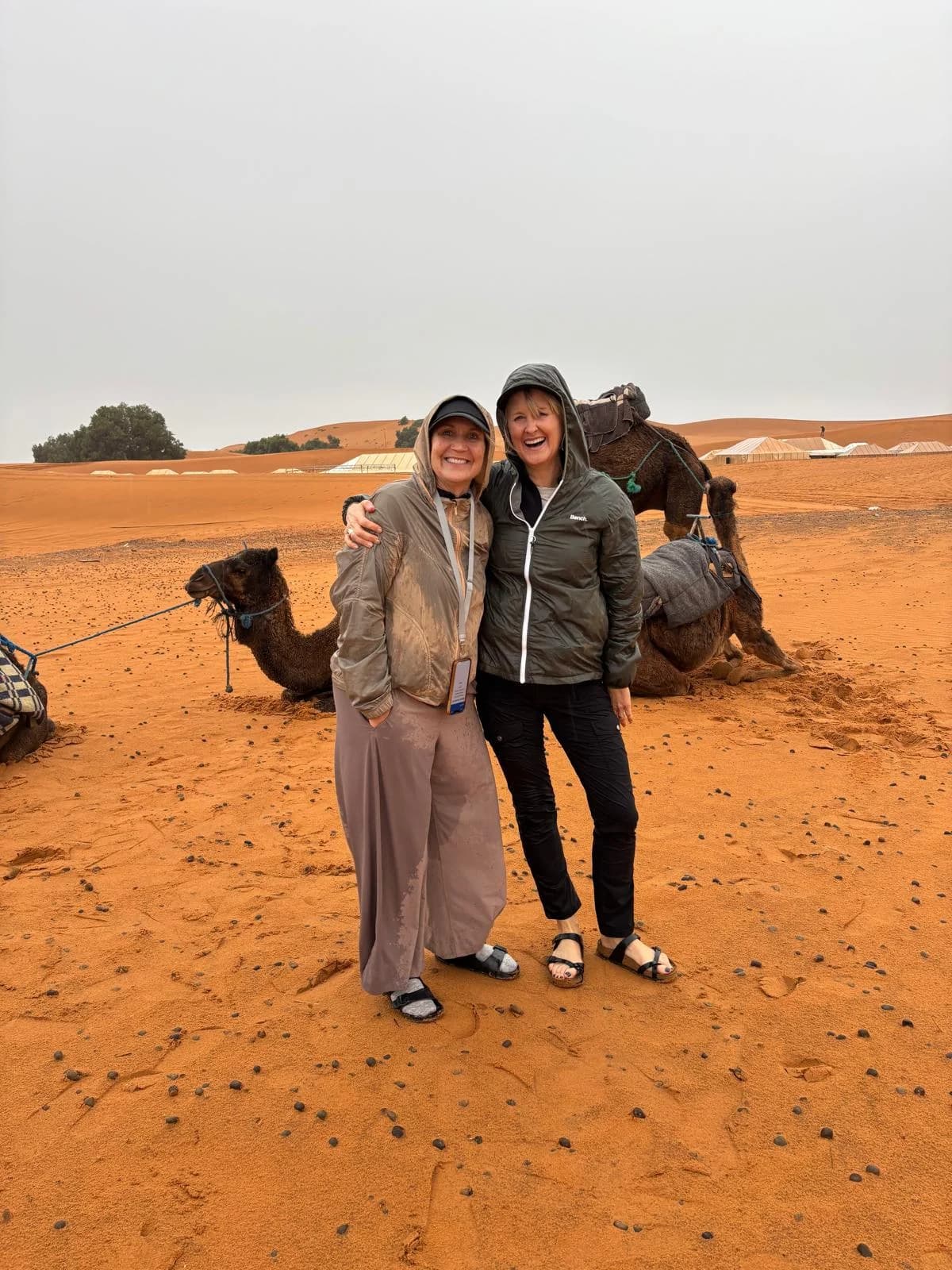
At Merzouga, the dunes of Erg Chebbi rise dramatically near the edge of the village, making the desert relatively accessible for travelers with limited time. At Erg Chigaga, beyond M’hamid el-Ghizlane, the desert feels wilder and more remote, reached by 4x4 across open tracks, rocky plains, and vast Saharan landscapes.
Both deserts can be extraordinary when matched to the right traveler.
A Sahara experience may include:
A camel ride or 4x4 transfer into camp.
Sunset over the dunes.
A private or shared desert dinner.
Berber music around the fire.
Stargazing with very little light pollution.
A night in a standard or luxury desert tent.
Sunrise over the sand.
Breakfast facing the dunes.
For many MSITravels clients, the Sahara becomes the emotional highlight of the entire Morocco trip. Even travelers who say they are “not desert people” often leave deeply moved by the silence, scale, and simplicity.
The Sahara reminds you how small modern life can become — and how beautiful it feels to be somewhere vast.
4. Moroccan Riads Are Some of the Most Beautiful Boutique Stays Anywhere
A riad is not just a hotel. It is part of the Morocco experience.
Traditional Moroccan riads are built around interior courtyards, often with fountains, zellige tilework, carved plaster, cedar wood, plants, lanterns, and rooftop terraces. From the outside, many riads look modest or even hidden. Inside, they open into calm, intimate, beautifully designed spaces.
This contrast is one of Morocco’s great pleasures.
You may spend the afternoon in the energy of Marrakech medina, then step through an old wooden door into a courtyard filled with water, tile, light, and silence. You may wake in Fes to the call to prayer, then have breakfast on a rooftop overlooking a thousand-year-old city. You may return from the Sahara and enter a kasbah-style guesthouse with warm tea, carpets, and mountain views.
Riads offer something large hotels often cannot: atmosphere, intimacy, and a sense of place.
For travelers from the USA, Canada, or Europe, Morocco also offers excellent value in boutique accommodation. A beautifully designed riad in Morocco can often cost significantly less than a comparable boutique hotel in Paris, Rome, London, or New York.
This does not mean every riad is equal. Location, service, heating, air-conditioning, bathroom quality, room size, and accessibility vary widely. MSITravels carefully selects riads based on comfort, charm, cleanliness, service, and traveler profile.
When chosen well, riads are one of the strongest reasons Morocco feels so special.
5. Moroccan Food Is One of the Great Joys of the Journey
Morocco is worth visiting for the food alone.
Moroccan cuisine is layered, aromatic, generous, and deeply connected to family life. It combines Amazigh, Arab, Andalusian, Mediterranean, Jewish, Saharan, and African influences into one of the world’s most recognizable culinary traditions.
A Morocco trip may include:
Slow-cooked tagines with preserved lemon and olives.
Lamb with prunes and almonds.
Chicken with saffron.
Vegetable couscous.
Harira soup.
Fresh bread baked daily.
Msemen pancakes with honey.
Zaalouk eggplant salad.
Pastilla with sweet and savory layers.
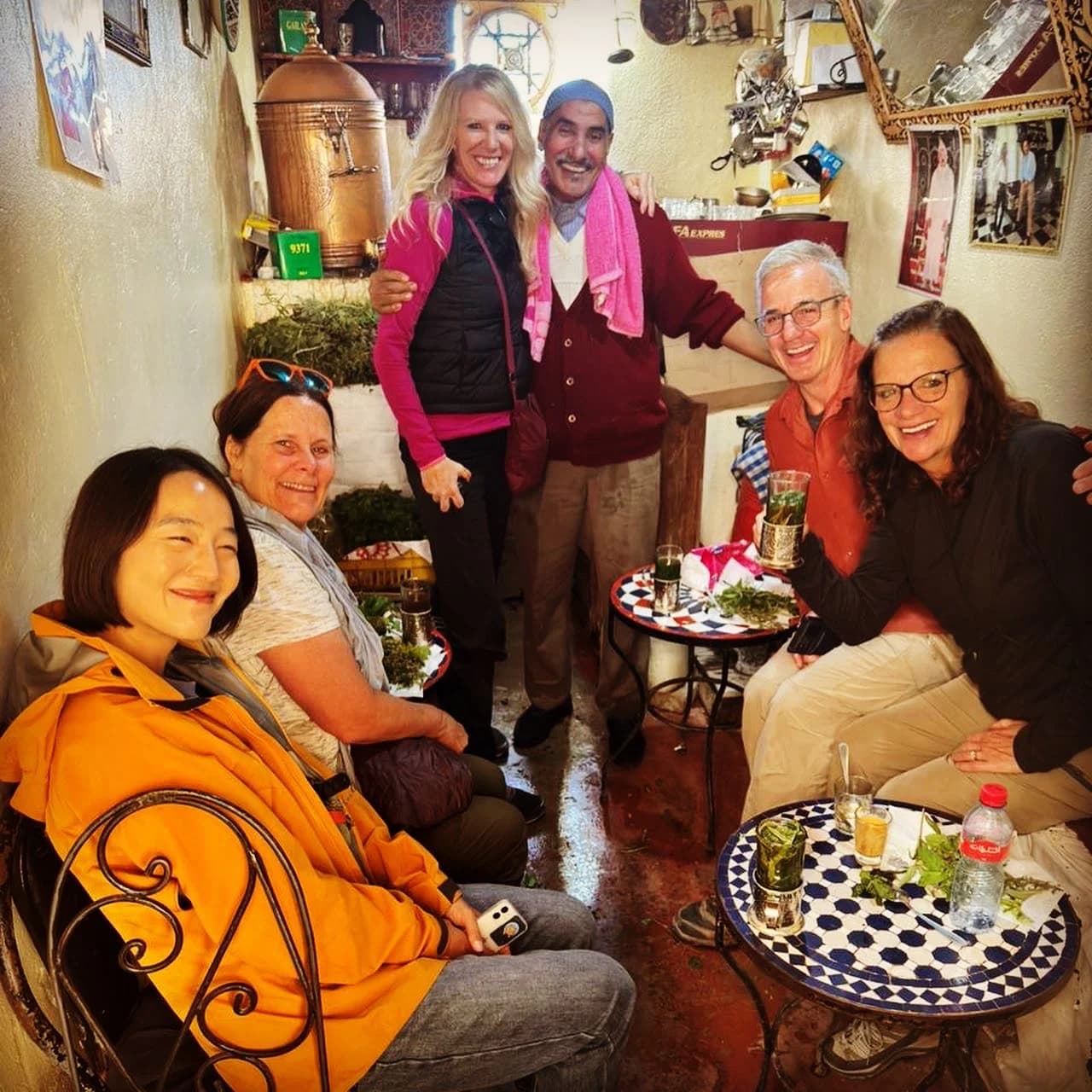
Mint tea served with ceremony.
Dates, almonds, olives, figs, and seasonal fruit.
Grilled seafood in Essaouira.
Local family meals in villages or private homes.
Food in Morocco is not only about restaurants. Some of the best meals happen in riads, family kitchens, small roadside stops, mountain homes, desert camps, and local markets.
Travelers are often surprised by the quality of Moroccan hospitality around meals. Tea is not rushed. Bread is shared. Dishes are served generously. Food becomes a way of welcoming guests, not simply feeding them.
MSITravels can design food-focused experiences such as cooking classes, market visits, family lunches, street food walks, farm-to-table meals, and special dinners in riads or desert camps.
If you travel to understand culture through taste, Morocco is absolutely worth visiting.
6. Morocco Feels Deeply Different Without Being Impossible to Reach
For North American travelers, Morocco offers something rare: a destination that feels genuinely different while still being relatively accessible.
From parts of the East Coast of the USA and Canada, Morocco can often be reached with direct or one-stop flights, depending on season and airline schedules. Casablanca is a major entry point, while Marrakech and other cities may work well depending on routing.
The reward is enormous. Within hours of arrival, travelers can find themselves in a world of medina walls, call to prayer, mint tea, Arabic and Amazigh languages, tiled courtyards, palm trees, souks, lanterns, desert roads, and mountain scenery.
Morocco feels far away in the best sense. It offers cultural difference, visual richness, and emotional freshness without requiring the extreme travel time of many long-haul destinations.
For travelers from Europe, Morocco is even more accessible. For travelers from the USA and Canada, it offers one of the most rewarding “different world” experiences within a manageable travel window.
This makes Morocco ideal for:
A 7-day first visit.
A 10-day private circuit.
A 12 to 14-day deeper cultural trip.
A honeymoon.
A family vacation.
A senior-friendly private journey.
A small group tour.
A special birthday or anniversary.
A return trip with a different regional focus.
Morocco gives a big travel reward for a reasonable amount of travel time.
7. Morocco Offers Excellent Value for Quality Travel
Morocco is not simply a budget destination. It is better described as a premium-value destination.
This means travelers can enjoy high-quality private travel, beautiful riads, experienced guides, comfortable vehicles, memorable meals, and special experiences at a cost that is often more accessible than comparable travel in Western Europe.
A well-designed private Morocco tour may include:
Private transportation.
Professional driver or driver-tour guide.
Licensed city guides.
Boutique riads.
Desert camp.
Breakfasts.
Selected dinners.
Cultural visits.
Route planning.
On-the-ground support.
For many travelers, the overall value feels exceptional because the trip includes so much variety. You are not paying only for hotel nights. You are paying for a complete travel experience: cities, mountains, desert, coast, food, architecture, culture, and guiding.
Approximate cost planning for a high-quality 10-day Morocco trip may include:
International flights: often around $700 to $1,300 or more depending on departure city, season, and booking time.
Private guided Morocco tour with boutique accommodation: often around $1,800 to $3,800 per person depending on season, route, comfort level, room category, and inclusions.
Personal spending, tips, optional shopping, drinks, and extras: often around $300 to $700 per person.
Luxury tours, premium camps, high-end riads, special honeymoon arrangements, and exclusive experiences can cost more. Small group tours may offer lower per-person pricing.
Compared with a similar private itinerary in Italy, France, Greece, or Spain, Morocco often allows travelers to experience a higher level of service, privacy, and accommodation character at a more accessible total cost.
That value is one of the reasons many travelers return.
8. The Atlas Mountains Are Dramatic, Beautiful, and Culturally Rich
The High Atlas Mountains are one of Morocco’s most underrated treasures.
Many travelers focus on Marrakech and the Sahara, but the Atlas Mountains create some of the country’s most beautiful and meaningful travel moments. The landscapes are dramatic: winding roads, high passes, terraced villages, walnut trees, red earth, snow peaks in winter, and valleys that change color by season.
The mountains are also home to Amazigh communities whose language, architecture, food, and traditions form an essential part of Moroccan identity.
A visit to the Atlas Mountains may include:
A scenic drive over the Tizi n’Tichka pass.
A stop in mountain villages.
A traditional lunch with a local family.
Light hiking.
Visits to kasbahs.
Views of terraced valleys.
A deeper understanding of rural Morocco.
For travelers who want to go beyond cities, the Atlas Mountains are essential. They show a Morocco of village life, mountain hospitality, and landscapes that feel far removed from the energy of Marrakech.
They also help balance an itinerary. After the intensity of the medinas, the mountains offer space, air, and perspective. Before the Sahara, they prepare travelers for the diversity of southern Morocco.
MSITravels can design Atlas experiences at different comfort levels, from scenic drives and gentle village visits to trekking, local homestays, or luxury mountain retreats.
9. Morocco’s Artisan Traditions Are Still Alive
In many destinations, traditional crafts are preserved mainly for tourists or museums. In Morocco, many artisan traditions remain part of living urban and rural economies.
In Fes, you can still see leather tanners, metalworkers, woodcarvers, ceramic makers, weavers, and zellige tile craftsmen practicing skills passed down through generations.
In Marrakech, the souks are filled with lantern makers, slipper sellers, spice merchants, carpet dealers, textile shops, and traditional workshops.
In the Middle Atlas and rural regions, carpets, embroidery, basketry, pottery, and weaving connect strongly to Amazigh identity and women’s cooperative work.
What makes Morocco special is that craft is not only decorative. It is architectural, social, and cultural. The same skills that create a decorative bowl may also appear in a palace, mosque, riad, fountain, or family home.
Travelers interested in design, architecture, interiors, photography, shopping, or cultural preservation will find Morocco endlessly rewarding.
However, artisan visits should be handled ethically. Not every shop is equal, and not every “cooperative” operates with the same standards. MSITravels helps travelers visit reputable artisans and cooperatives where the experience feels respectful rather than pressured.
Shopping in Morocco can be wonderful when it is transparent, optional, and connected to real craft.
10. Moroccan Hospitality Is Genuine
Hospitality in Morocco is not a performance created only for tourists. It is a cultural value.
Visitors often remember the tea as much as the monuments. They remember being welcomed into a home, being offered bread, being asked about their family, or being invited to sit for a moment even when no purchase was made.
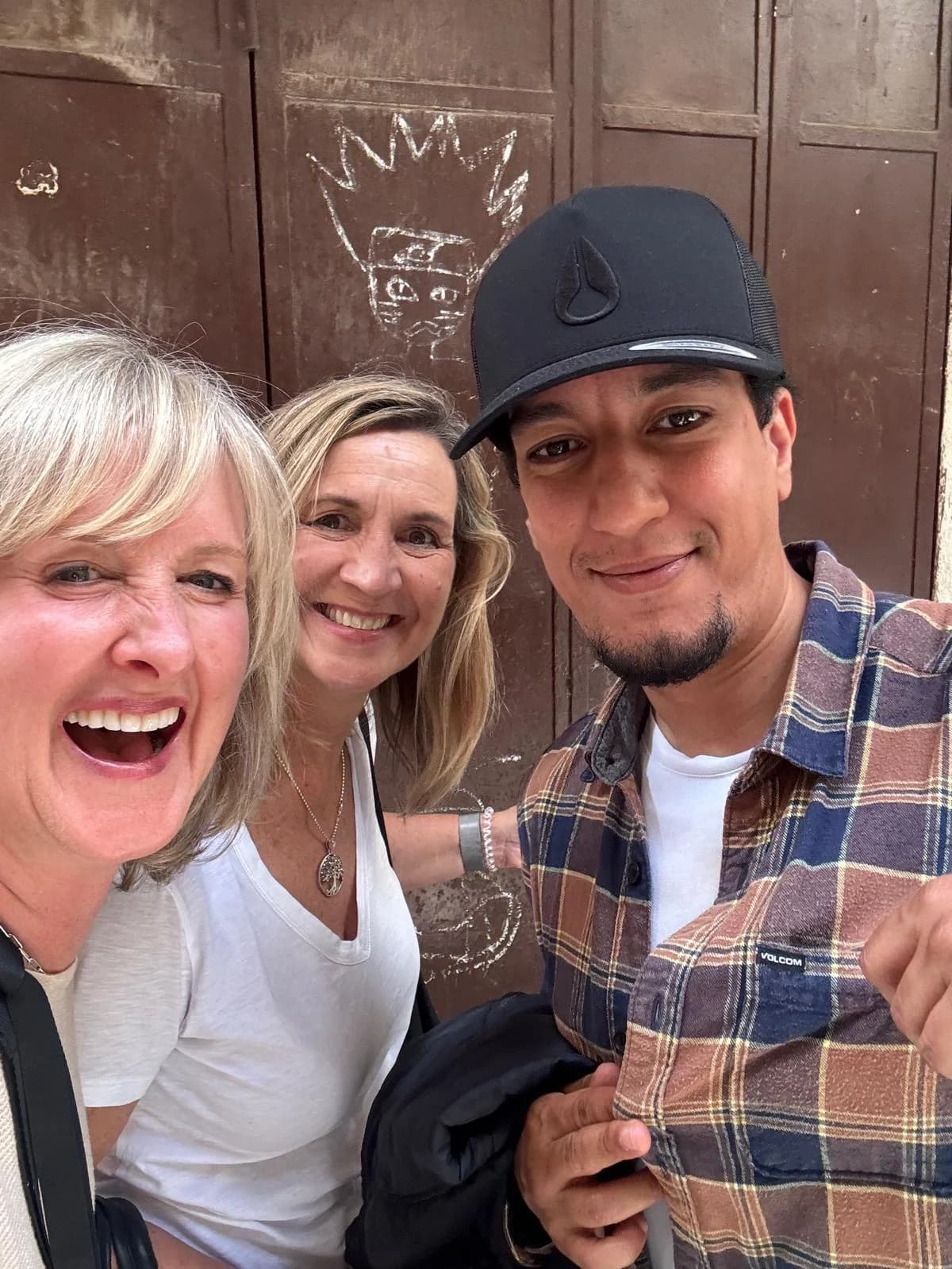
Moroccan hospitality can be warm, generous, and deeply human. It appears in riads, family meals, desert camps, mountain villages, city tours, roadside cafés, and small conversations.
This does not mean every interaction is perfect or that travelers should abandon normal awareness. Busy tourist areas can include vendor pressure, sales tactics, and persistent approaches. But beyond that, many travelers discover a country where kindness is frequent and sincere.
The key is traveling with cultural respect.
Learn a few words of Arabic or Amazigh greetings.
Dress modestly in traditional areas.
Ask before photographing people.
Accept tea when appropriate.
Be patient with different rhythms.
Understand that hospitality may move more slowly than a Western schedule.
When travelers arrive with openness, Morocco often responds with warmth.
This human connection is one of the strongest reasons the country stays in people’s memories.
11. Morocco Is Incredibly Photogenic
Morocco is one of the most visually rewarding destinations in the world.
The country seems designed for photographers, artists, and anyone who notices light, color, pattern, and texture.
You may photograph:
The blue streets of Chefchaouen.
The red walls of Marrakech.
The golden dunes of Erg Chigaga or Merzouga.
The green palms of the Draa Valley.
The geometric zellige of Fes.
The white-and-blue coast of Essaouira.
The dramatic High Atlas roads.
The old ksar of Ait Benhaddou.
Brass lanterns and carved cedar doors.
Rooftop views at sunset.
Spice pyramids in the souks.
Camel silhouettes at golden hour.
But Morocco is not only photogenic because of famous views. It is photogenic because of details: a hand pouring tea, a shadow on a tiled wall, bread stacked at a bakery, a carpet pattern, a weathered door, a musician’s instrument, the curve of a desert dune.
Responsible photography matters. Travelers should always ask before photographing people, especially women, children, artisans, and rural families. A good guide can help with permissions and cultural sensitivity.
For photographers, MSITravels can design itineraries around light, timing, landscapes, medinas, crafts, and less crowded viewpoints.
Morocco rewards the eye again and again.
12. Morocco Is Welcoming for Many Types of Travelers
One reason Morocco is so popular is that it can be designed around many different travel styles.
Couples love Morocco for riads, hammams, rooftop dinners, desert camps, and romantic landscapes.
Honeymooners love it for privacy, luxury, adventure, and unique experiences.
Families love it for camel rides, cooking classes, medina walks, beach time, and cultural discovery.
Senior travelers love it when the itinerary is well-paced, with comfortable vehicles, carefully selected accommodation, and manageable walking.
Women-only groups love Morocco for cooperatives, cuisine, crafts, cultural exchange, and guided support.
Solo travelers love the sense of discovery when logistics are handled safely.
Students and young adults love the mix of history, food, adventure, and social impact.
Luxury travelers love Morocco because the country offers extraordinary design, private experiences, and boutique accommodation.
Budget-conscious travelers love Morocco because it offers strong value.
The destination is flexible. The key is designing the itinerary properly.
A fast-paced backpacking route is not the same as a senior-friendly private tour. A luxury honeymoon is not the same as a student adventure. A family trip needs different pacing than a photography tour.
MSITravels specializes in tailoring Morocco to the traveler, not forcing every client into the same route.
13. Responsible Travel in Morocco Can Create Real Local Benefit
Morocco is worth visiting not only because of what travelers receive, but also because of what thoughtful travel can support.
When planned responsibly, a Morocco trip can benefit:
Local guides.
Professional drivers.
Family-owned riads.
Women’s cooperatives.
Artisan workshops.
Small restaurants.
Desert camp teams.
Mountain communities.
Local cooks and hosts.
Education and community initiatives.
MSITravels was built around the belief that tourism should create meaningful local value. Our wider responsible travel model includes working with Moroccan professionals, supporting locally owned accommodation, encouraging respectful cultural exchange, and connecting travel with community impact, including girls’ education support in rural Zagora.
This matters because not all tourism spending reaches local communities equally. Large international platforms and foreign-owned operators may extract much of the value from the destination. Locally owned operators help more of the economic benefit remain in Morocco.
Choosing the right Morocco travel company can shape the impact of your trip.
With MSITravels, your journey is designed not only to be beautiful and comfortable, but also connected to the people and places that make Morocco special.
Travel can be enjoyable and responsible at the same time.
In Morocco, that combination is especially powerful.
14. Morocco Feels Safe and Manageable with Good Planning
Safety is one of the most common concerns for first-time visitors.
The honest answer is that Morocco is widely experienced by travelers as welcoming, stable, and manageable, especially when visiting well-known routes with professional planning. Millions of travelers visit Morocco and have positive experiences.
That said, responsible travel writing should not pretend that no destination has risks. Travelers should check current official travel advisories before departure, follow local guidance, use normal awareness in crowded areas, protect valuables, avoid unofficial guides, drink bottled or filtered water when appropriate, and respect local customs.
The most common challenges in Morocco are usually not violent crime. They are practical travel issues such as:
Getting lost in medinas.
Persistent vendors in tourist areas.
Overpaying without guidance.
Accepting help from unofficial guides.
Heat in summer.
Long drives if the itinerary is poorly planned.
Cultural misunderstanding.
These challenges are greatly reduced with the right guide, driver, itinerary, and pre-trip advice.
For women travelers, Morocco requires cultural awareness, especially around clothing and behavior in traditional areas. But many women travel Morocco safely and happily every year, including solo travelers and women-only groups. A guided or private tour can provide additional comfort, especially for first-time visitors.
MSITravels helps clients understand what to expect before arrival so the experience feels confident rather than confusing.
Morocco is not difficult when it is planned well.
15. Morocco Is Not a Once-and-Done Destination
Some countries can be understood in one trip.
Morocco is not one of them.
A first trip may cover Marrakech, the Sahara, Fes, Chefchaouen, and Casablanca or Rabat. But that still leaves Essaouira, Agadir, Tafraoute, the Anti-Atlas, Tangier, Tetouan, Asilah, the Draa Valley, Erg Chigaga, Meknes, Volubilis, Ouzoud, Imilchil, the Middle Atlas, and many lesser-known regions.
Even returning to the same places can feel different with more context. Marrakech on a second visit feels less overwhelming and more enjoyable. Fes reveals details you missed the first time. The Sahara changes by season and mood. The coast offers a different rhythm. The mountains invite slower travel.
Many MSITravels clients begin with a classic Morocco tour and later return for:
A deeper desert journey.
A food-focused trip.
A women-only cultural tour.
A family reunion.
A honeymoon or anniversary.
A wellness retreat.
A photography journey.
A southern Morocco itinerary.
A coastal escape.
A small group tour.
A custom trip with friends.
Morocco has depth. It keeps unfolding.
That is one of the clearest signs that it is worth visiting.
A destination is truly special when the first journey makes you want a second.
What Does It Cost to Visit Morocco?
Morocco can be experienced at many budget levels, from independent backpacking to high-end luxury. For travelers booking a well-organized private tour with boutique accommodation and professional guiding, Morocco offers excellent value.
A quality 10-day Morocco trip from the USA or Canada may include:
International flights: approximately $700 to $1,300 or more depending on route, season, and booking timing.
Private guided tour with boutique riads and desert experience: approximately $1,800 to $3,800 per person depending on itinerary, season, accommodation level, room category, and inclusions.
Personal spending: approximately $300 to $700 per person for tips, drinks, optional shopping, extra meals, and personal purchases.
A high-quality 10-day private Morocco experience may therefore range roughly from $2,800 to $5,800 per person all-in, depending on flights and travel style.
Luxury honeymoon packages, premium riads, high-end desert camps, private experiences, spa treatments, and exclusive dining can cost more. Small group tours may reduce per-person costs while still offering excellent service.
The important point is that Morocco offers strong value for the level of experience. It is not about cheap travel. It is about receiving a rich, private, culturally deep journey at a price that often compares favorably with similar-quality travel in Europe.
Common Hesitations About Visiting Morocco
“I’ve heard Morocco has too much hassle.”
It is true that some busy tourist areas, especially parts of Marrakech, can include vendor pressure, unofficial guides, and persistent sellers. This is part of what some travelers find challenging.
However, this is not the whole Morocco experience.
With a good guide, a well-located riad, and clear advice, the issue becomes very manageable. Travelers quickly learn how to decline politely, where to walk, how to shop, and how to enjoy the medina without feeling overwhelmed.
Fes, Marrakech, and other medinas are much easier with a licensed guide.
“Is the food safe?”
Food in quality riads, restaurants, and trusted local experiences is generally very good and widely enjoyed by travelers. As with any destination, it is wise to use judgment: drink bottled or filtered water if advised, eat in reputable places, avoid food that looks poorly handled, and tell your tour operator about dietary restrictions or allergies.
For many visitors, Moroccan food becomes one of the biggest highlights of the trip.
“Is Morocco difficult for women travelers?”
Morocco is culturally different from North America and Europe, and women travelers should dress modestly in traditional areas, especially medinas, rural villages, and religious neighborhoods. Loose trousers, maxi skirts, covered shoulders, and light scarves are useful.
However, Morocco is not an impossible or unusually difficult destination for women. Many women travel Morocco every year, including solo travelers and women-only groups. A private guided trip can make the experience more comfortable, especially for first-time visitors.
“Is Morocco too chaotic?”
Morocco can feel intense, especially on arrival in Marrakech or Fes. But the intensity is part of the experience when balanced with quiet riads, good pacing, gardens, mountains, desert, coast, and guided support.
A good itinerary should not overwhelm you every day. It should alternate energy with calm.
“Is the Sahara worth the long drive?”
Yes, for most travelers, the Sahara is worth it — if the route is designed properly.
The drive should not feel like empty transfer time. It should include the High Atlas, kasbahs, valleys, villages, scenic stops, and meaningful breaks. With the right pacing, the road to the desert becomes part of the story.
Expert Insight from Aziz, Founder of MSITravels
“I grew up in Morocco, so I know what this country offers beyond the postcard images. Every year, I meet travelers who arrive with questions. They wonder if Morocco will be too chaotic, too unfamiliar, or too difficult. Then they spend a few days here, and something changes.
They sit in a riad courtyard after the noise of the medina. They walk through Fes with a guide who explains things they would never understand alone. They cross the Atlas Mountains. They see the Sahara at sunset. They share tea with a family. They taste food cooked slowly, with care. They realize Morocco is not just beautiful. It is alive.
For me, the answer to ‘Is Morocco worth visiting?’ is easy. Yes. But the deeper answer is this: Morocco is worth visiting when you allow it to be more than a checklist. Come with curiosity, travel with the right people, and give the country enough time to show you its layers. That is when Morocco becomes unforgettable.”
What MSITravels Clients Say
“Worth it does not begin to describe it. My wife and I visited Morocco for 10 days for our 20th anniversary. We have traveled to more than 30 countries, and Morocco is now in our top three. The riads, the Sahara, the food, the people, the colors, the history — we were not prepared for how extraordinary it would be. We are already planning to return with our adult children.”
— Richard & Susan P., Dallas, Texas
“I almost talked myself out of Morocco several times before booking. I had read too many negative comments online and was nervous. I am so glad I went. Morocco was beautiful, welcoming, safe with good planning, and far more comfortable than I expected. MSITravels made everything feel smooth. I now tell everyone: go to Morocco.”
— Charlotte B., London, UK
“As Canadians, we wanted somewhere different but not impossible to reach. Morocco gave us everything: history, food, desert, mountains, coast, and people who made us feel genuinely welcome. It was one of the richest trips we have taken.”
— MSITravels private tour clients, Canada
Final Verdict: Is Morocco Worth Visiting?
Yes. Morocco is absolutely worth visiting.
It is worth visiting for the medinas, the Sahara, the Atlas Mountains, the riads, the food, the coast, the architecture, the craft traditions, the hospitality, the photography, the value, and the cultural depth.
It is worth visiting because it feels different from everyday life.
It is worth visiting because it offers both beauty and meaning.
It is worth visiting because a well-designed Morocco trip can include history, adventure, comfort, romance, community impact, and unforgettable landscapes in one journey.
Morocco may not be the right destination for someone who wants everything to feel predictable, silent, and familiar. But for travelers who want color, culture, movement, warmth, and discovery, Morocco is one of the most rewarding destinations in the world.
MSITravels has guided more than 4,000 travelers from the USA, Canada, the UK, and beyond through Morocco. We specialize in private Morocco tours, small group tours, Sahara Desert experiences, family journeys, senior-friendly itineraries, women-only tours, honeymoon packages, wellness retreats, student adventures, and fully tailor-made travel.
Whether you are planning your first Morocco trip from New York, a honeymoon from Toronto, a family journey from London, a retirement celebration from California, or a custom private tour from anywhere in the world, MSITravels can help you experience Morocco at the right pace, with the right local insight, and with a meaningful connection to the people and places you visit.
To begin planning your Morocco journey, visit MSITravels.com and explore our private tours, small group tours, Sahara Desert packages, romantic itineraries, and custom Morocco travel experiences.
The question is not only whether Morocco is worth visiting.
The better question is: how soon do you want to go?
MSITravels Team
Travel enthusiast and Morocco expert, sharing insights and stories from years of exploring Morocco's hidden gems and iconic destinations.
Ready to Explore Morocco?
Choose the experience that fits you best
Private Tour
A fully tailored Morocco experience crafted exclusively for you and your group.
View Private ToursSmall Group Tour
Join a curated group of like-minded travellers and discover Morocco together.
View Group ToursCustom Tour
Tell us your dream trip and we'll build a bespoke Morocco itinerary from scratch.
Tailor Your TourExplore More Stories
Discover more travel tips and inspiration for your Moroccan adventure
View All Articles